



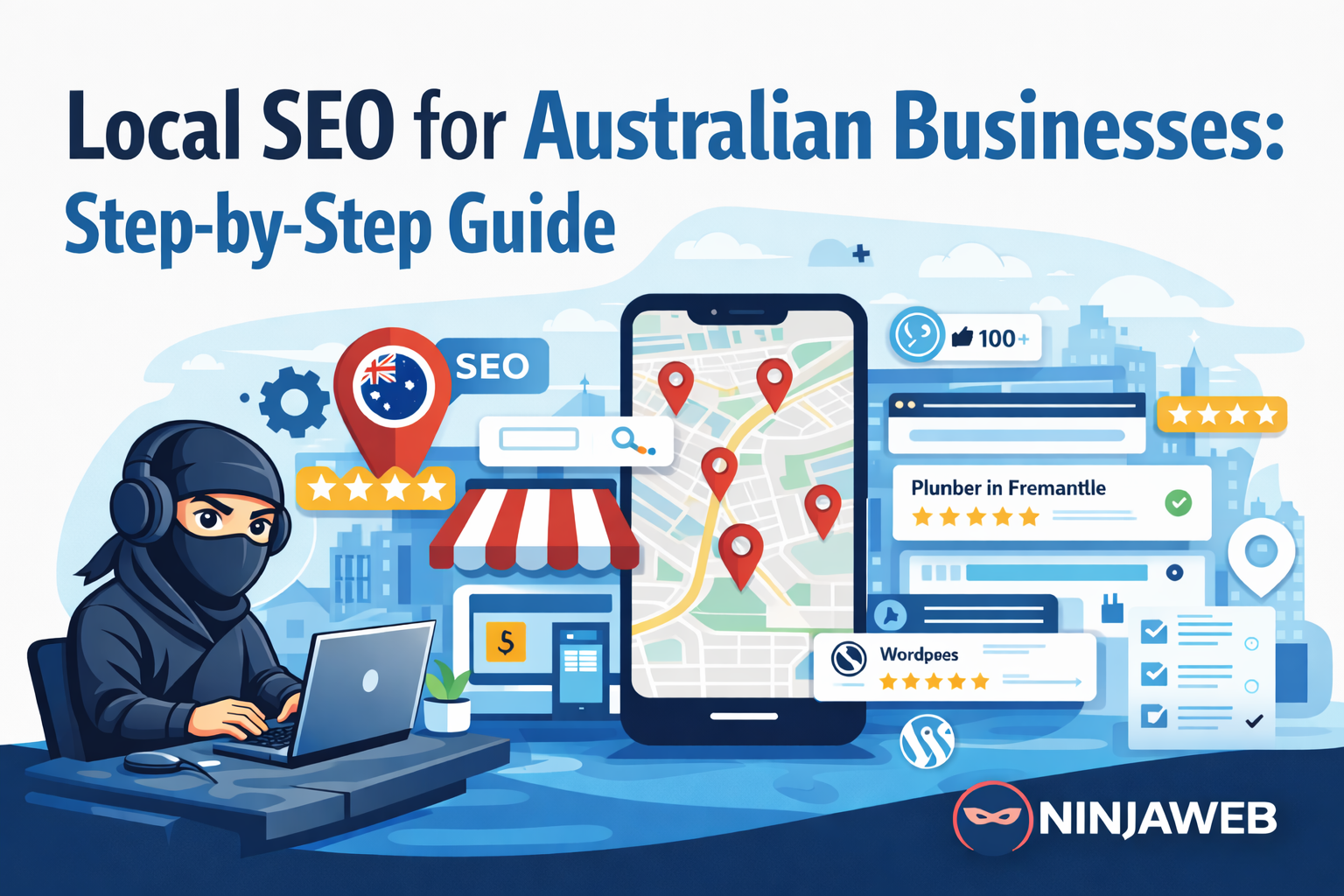

Local SEO is not about chasing national traffic. It is about owning your area. When someone searches for your service in your city or suburb, your website should be one of the first things they see. If it is not, your competitors are taking those enquiries.
This guide walks you through exactly how local SEO works in Australia and how to fix it properly.
Step 1: Build Pages for Real Locations
Most small business websites fail at local SEO because they only have one generic service page. Google does not know where you actually operate.
If you service multiple suburbs or regions, you need properly structured location pages. Not spam pages. Real pages with relevant content.
For example, instead of one “Plumbing Services” page, you should have:
- Plumber in Perth
- Emergency Plumber in Fremantle
- Hot Water Repairs in Rockingham
Each page must include specific local signals. Mention the suburb naturally. Reference nearby landmarks. Add local testimonials if possible. Make it clear that you genuinely work in that area.
If your current website is not structured this way, it may be time for a rebuild or expansion through WordPress Experts so your foundation is correct.
Step 2: Optimise Your Google Business Profile Properly
Your Google Business Profile is not optional. It is one of the strongest ranking factors for local search.
Make sure:
- Your business name is accurate and consistent
- Your address and service areas are correct
- Your categories are properly selected
- You upload real photos regularly
- You actively request reviews
Reviews are critical. A business with 60 reviews will almost always outperform one with 6. Consistency matters more than perfection.
Step 3: Fix Your Website Speed
Speed directly affects rankings and conversions. If your site takes more than a few seconds to load on mobile, people leave. Google sees that behaviour.
Local SEO is not just keywords. It is experience. A fast, stable website increases time on site and reduces bounce rate.
If your hosting is slow or overloaded, upgrading to properly configured Web Hosting or Managed WordPress Hosting can make an immediate difference.
Step 4: Use Local Keywords Naturally
Keyword stuffing does not work anymore. What works is natural relevance.
If you are an electrician in Brisbane, your page should clearly state:
“We provide residential and commercial electrical services across Brisbane and surrounding suburbs.”
Use variations naturally throughout your content. Include suburb names where relevant, but do not force them into every sentence.
Also include your full business details in the footer. Name, address, phone number. This is known as NAP consistency. Google uses it to confirm legitimacy.
Step 5: Build Local Authority
Backlinks still matter. Especially local ones.
Get listed in:
- Local business directories
- Chamber of Commerce listings
- Industry associations
- Local sponsorship pages
Even a handful of strong local mentions can push your rankings above competitors who ignore this step.
Step 6: Create Local Content
One of the strongest signals you can send to Google is publishing helpful content tied to your region.
Examples:
- “How to Prepare Your Roof for Storm Season in Perth”
- “Best Air Conditioning Setup for WA Summers”
- “Common Plumbing Issues in Older Melbourne Homes”
This positions you as a local authority, not just another service provider.
If you want a structured content strategy that builds local traffic over time, that is where Search Engine Optimisation becomes a long-term growth plan instead of random blog posts.
Step 7: Optimise for Mobile First
Most local searches happen on phones. If your website feels clunky on mobile, you are losing business.
Buttons should be easy to tap. Phone numbers should be clickable. Forms should be simple. The design must guide people toward contacting you quickly.
This is not just design. It is conversion strategy.
Why Most Small Businesses Struggle With Local SEO
Here is the truth. Most websites were built once and never touched again. No location strategy. No structured content. No speed optimisation. No review growth plan.
Local SEO is not complicated, but it requires consistency. It requires structure. And it requires understanding how Google connects relevance, authority, and user behaviour.
What Happens When It Is Done Properly
When local SEO is implemented correctly, you start appearing in map results. You rank for suburb-based searches. You receive calls from people who are ready to buy, not just browsing.
Instead of competing with the entire country, you dominate your own backyard.
Ready to Fix Your Local Visibility?
If your business is not ranking where it should be, the solution is usually structural. Not magic.
NinjaWeb builds and optimises websites specifically for Australian businesses that want predictable local enquiries. From technical setup to content expansion and performance hosting, everything is aligned around real-world results.
If you are ready to strengthen your local presence, start here: Contact NinjaWeb.