Sign up for a 30 Days FREE TRIAL

NinjaWeb

Contact Info

106 Anne rd Knoxfield 3180 Vic Australia

+61 (03) 82023009

info@ninjaweb.com.au

Contact us
Recommended Services
Supported Scripts
WordPress
Joomla
Drupal
Magento
Javascript
Angular
React
NodeJS
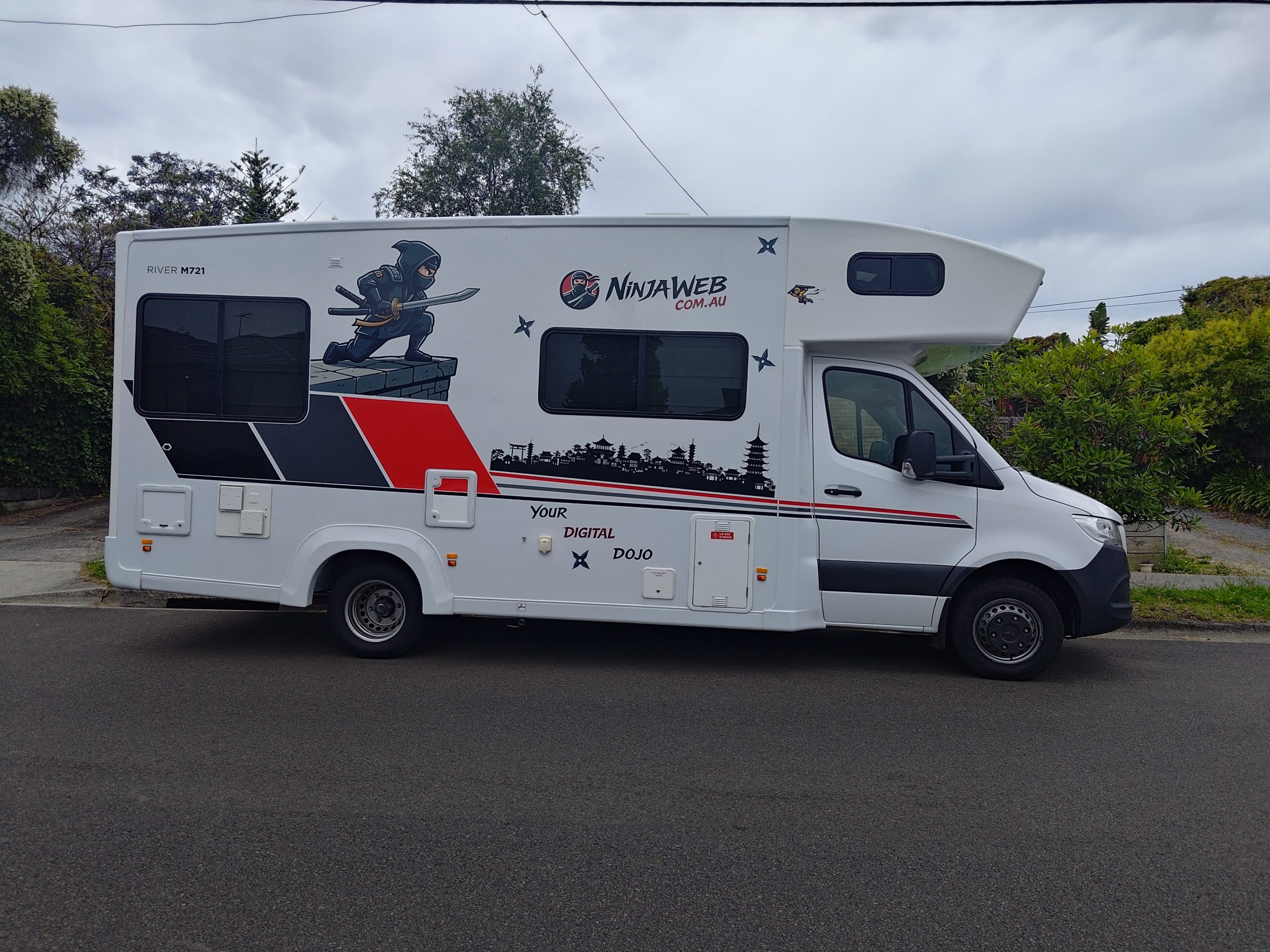
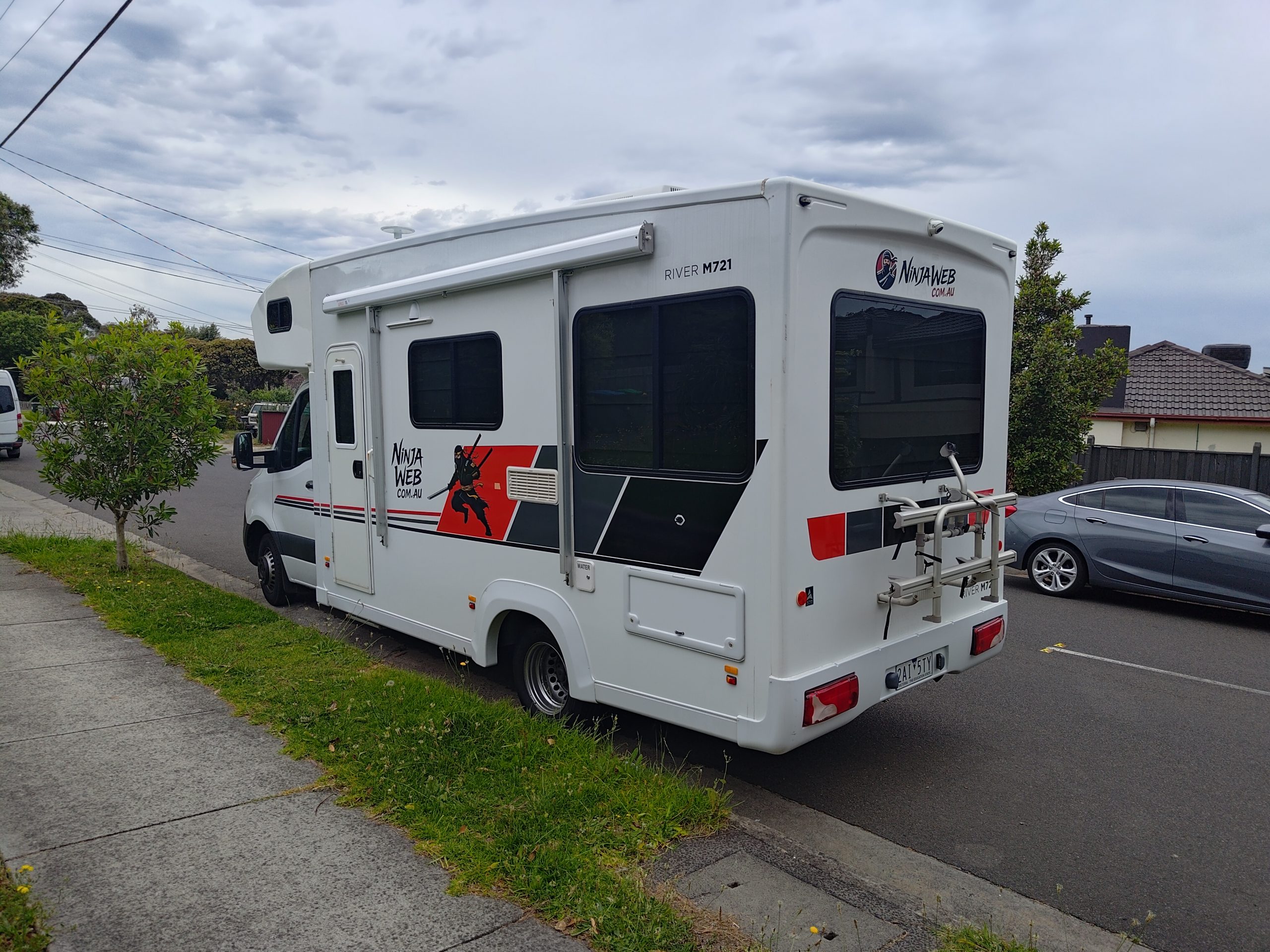
Full side profile of the Mobile Dojo featuring the completed NinjaWeb wrap and visual identity.

When the World Shifted Faster Than I Could Stand Still

When the digital world accelerates beyond human pace, you realise something uncomfortable: standing still isn’t stability – it’s surrender.
Some people freeze when the environment changes. Others drift with the current and hope it takes them somewhere safe.
But there’s a third type – the one who reads the chaos, steps forward and decides to redraw the map instead of following it.
That’s the path I chose.

My circumstances flipped almost overnight. The ground beneath my routine cracked. My work – once predictable, structured, contained – suddenly fell into a grey zone with no guarantees and no option to slow down.

And when life throws you into uncertainty, you either shrink your ambitions to fit the chaos… or you build something stronger.

That’s the moment the idea was born.

Not out of travel dreams.
Not out of “van life inspiration.”
Out of necessity – a sharp, uncomfortable truth:

If the world around me was shifting, then my headquarters had to shift too.

I needed an office that didn’t rely on geography. A workspace that wouldn’t collapse just because my routine did. A command environment I could take with me, adapt on the fly, and keep delivering without compromise.

So the question wasn’t “How do I keep working while moving?”
The real question became:

“What does a digital warrior build when the battlefield refuses to stay still?”

The answer was simple:
A mobile dojo – a headquarters in motion, a digital fortress on wheels, a system designed to stay online, stay sharp and stay operational no matter what the road, life or circumstances decided to do next. And the truth is, running a digital agency from a moving home on wheels only sounds like a fantasy until you realise the real limitation was never the equipment – it was the mindset. 

From Forecourt Shell to Mobile Dojo

I didn’t go hunting for the perfect motorhome. I wasn’t chasing aesthetics or trends. I needed a machine that could take a beating, fit my family, and endure a complete transformation without flinching.

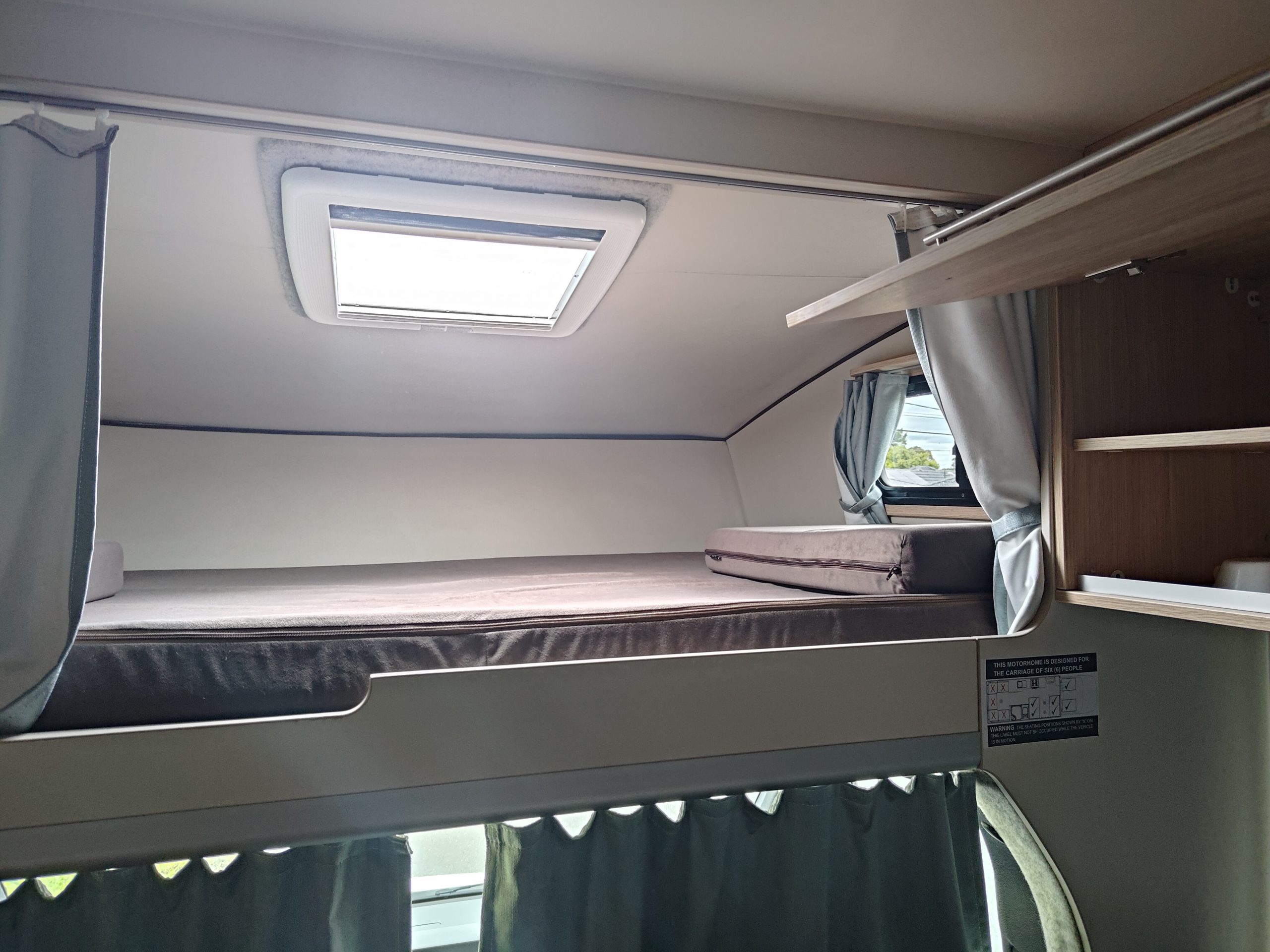
The Mercedes Sprinter KEA platform ticked those boxes. Everything else – the rental stripes, the bland interior, the dealership quirks – didn’t matter. What mattered was that it gave me a solid foundation to build on.

The Mobile Dojo wasn’t an accident – it was engineered from the start. Every upgrade, every system, every modification inside that Sprinter was planned with one purpose: turn a standard motorhome into a fully capable command center. That’s the Digital Ronin path: deliberate design, precise execution, and rebuilding a machine that serves the mission without compromise.

The dealership phase was pure reconnaissance.
Identify the weak points.
Map the flaws.
Plan the strikes.

A leaking water tank.
An AC that only blew cold.
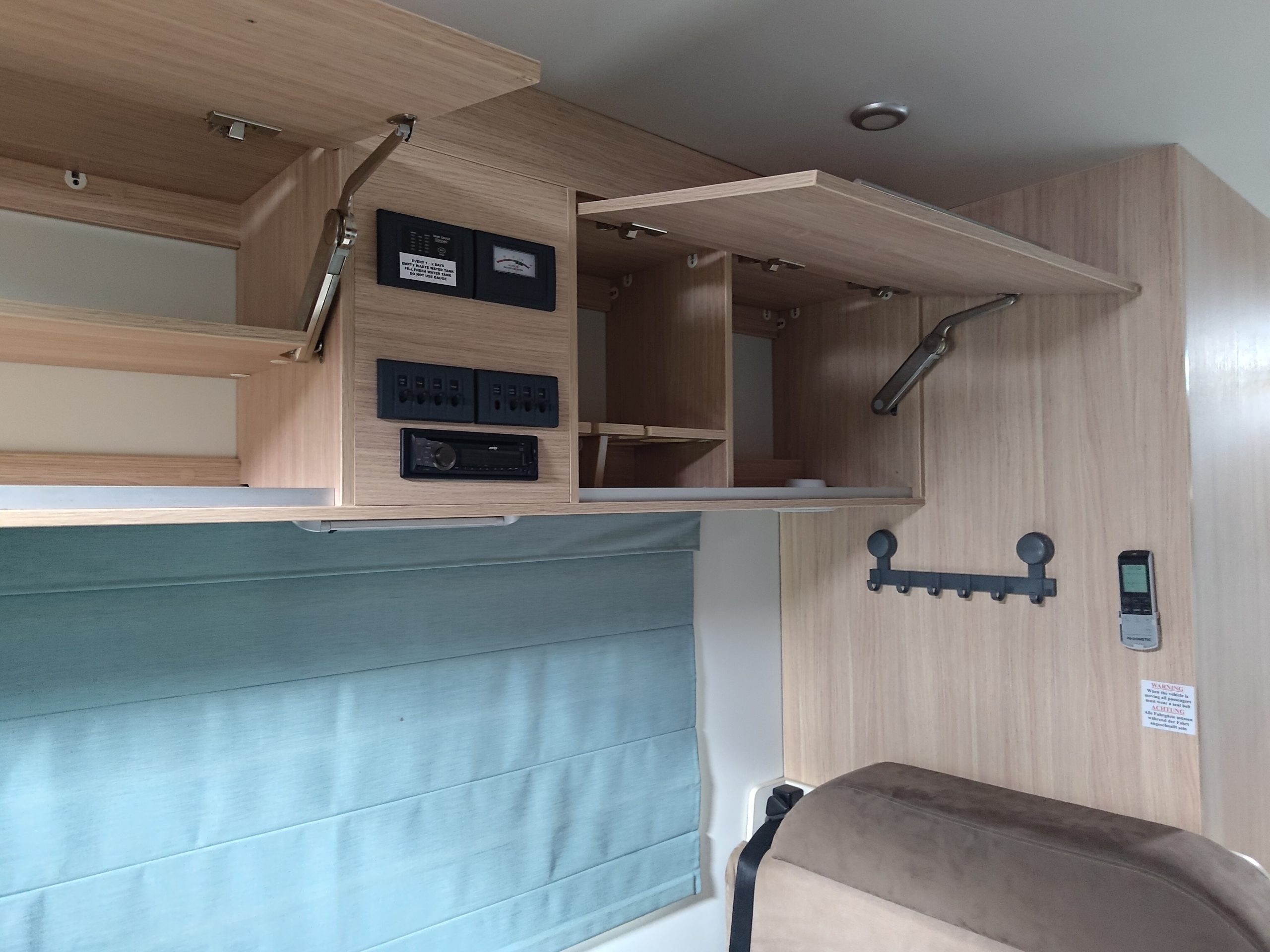
No USB ports where they mattered.
Missing keys, odd behaviours, and the usual dealership gremlins hiding behind polite smiles.

None of it was fatal.
It was simply the pre-battle assessment – the necessary survey before you start shaping a vehicle into a command center.

Driving it out of the dealership felt like lifting a blade that wasn’t sharpened yet. The form was there, but the identity was still buried. The potential was obvious – the Dojo simply hadn’t revealed itself.
The first mission was simple:
Get the shell home.
Stabilise it.

Begin the transformation.

Power Comes First

The first problem to solve was power. Nothing else matters if the system cannot stay on.

Running a business from a motorhome means long hours, real workloads and no margin for random shutdowns. The original setup was fine for casual travel, but it was not built for daily work, multiple devices and constant draw. That had to change.

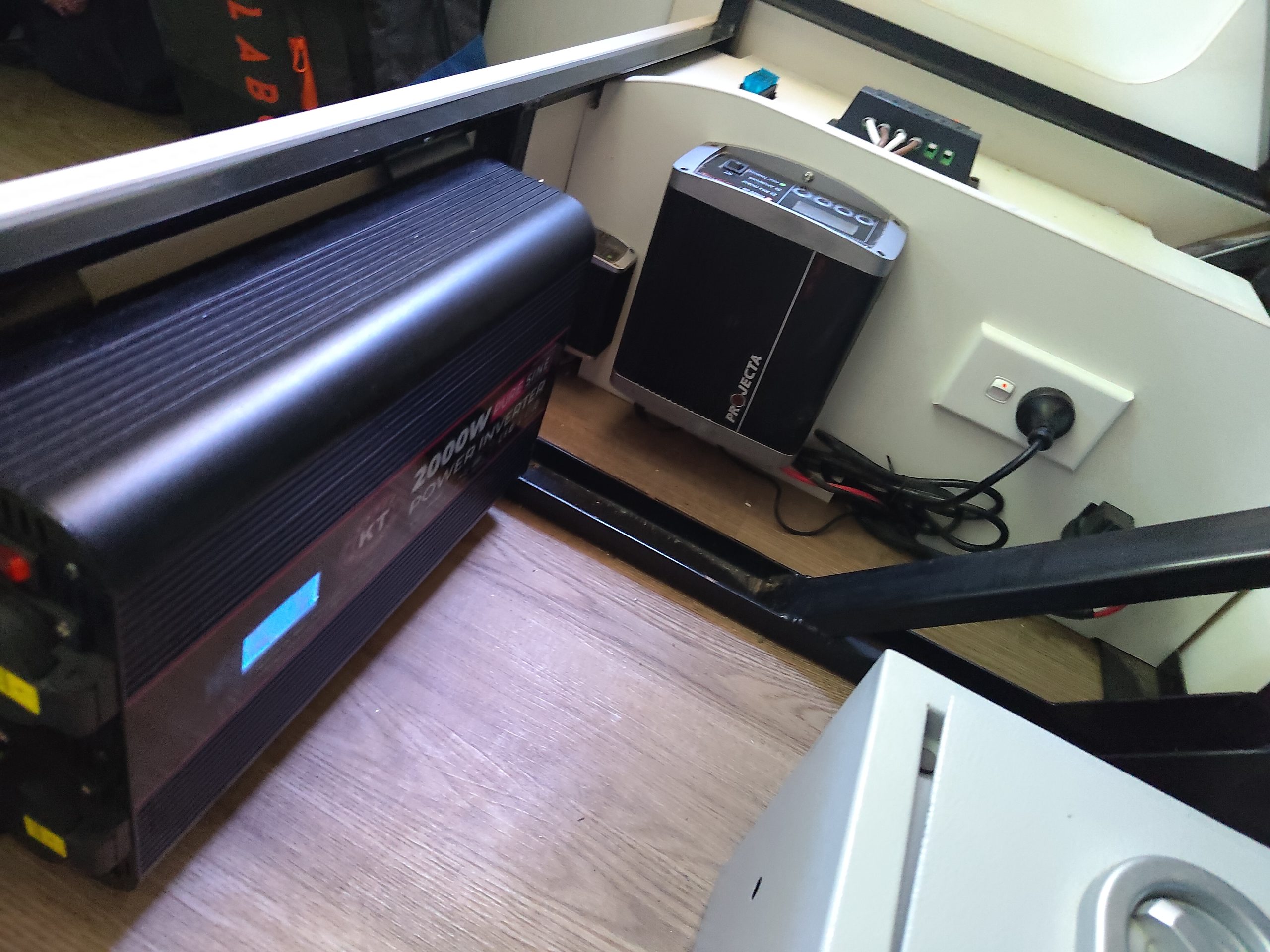
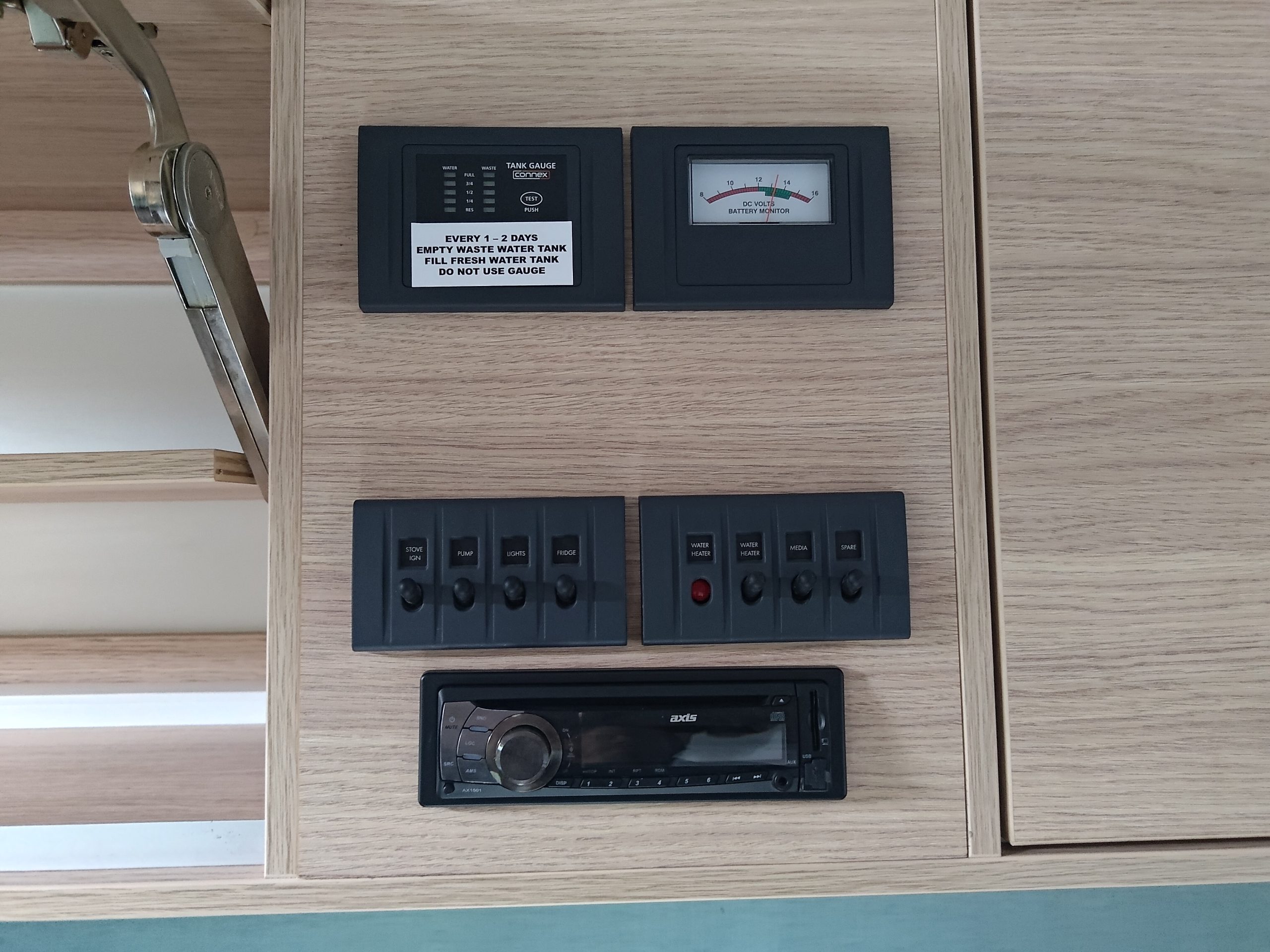
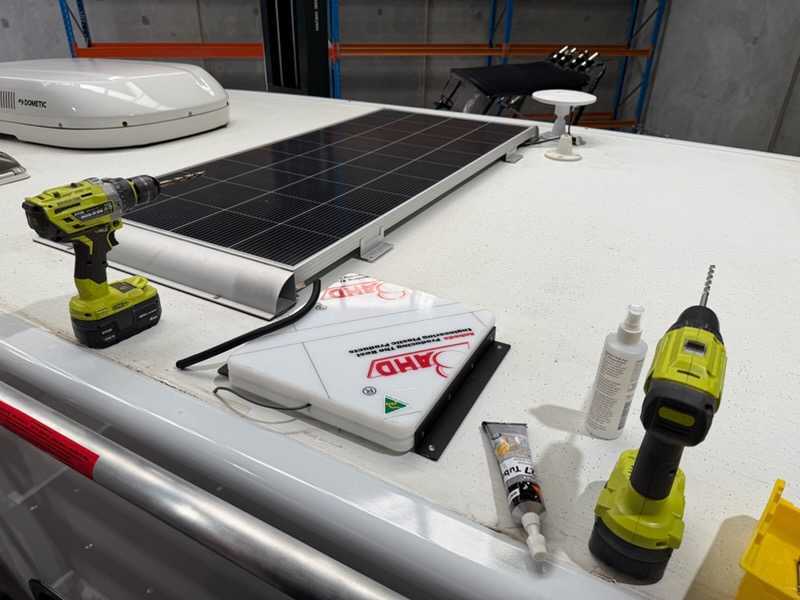
The power system was upgraded with higher battery capacity and additional roof solar to support sustained use. Wiring and charging paths were checked and corrected so everything behaved the way it should. The goal was consistency, not peak numbers.

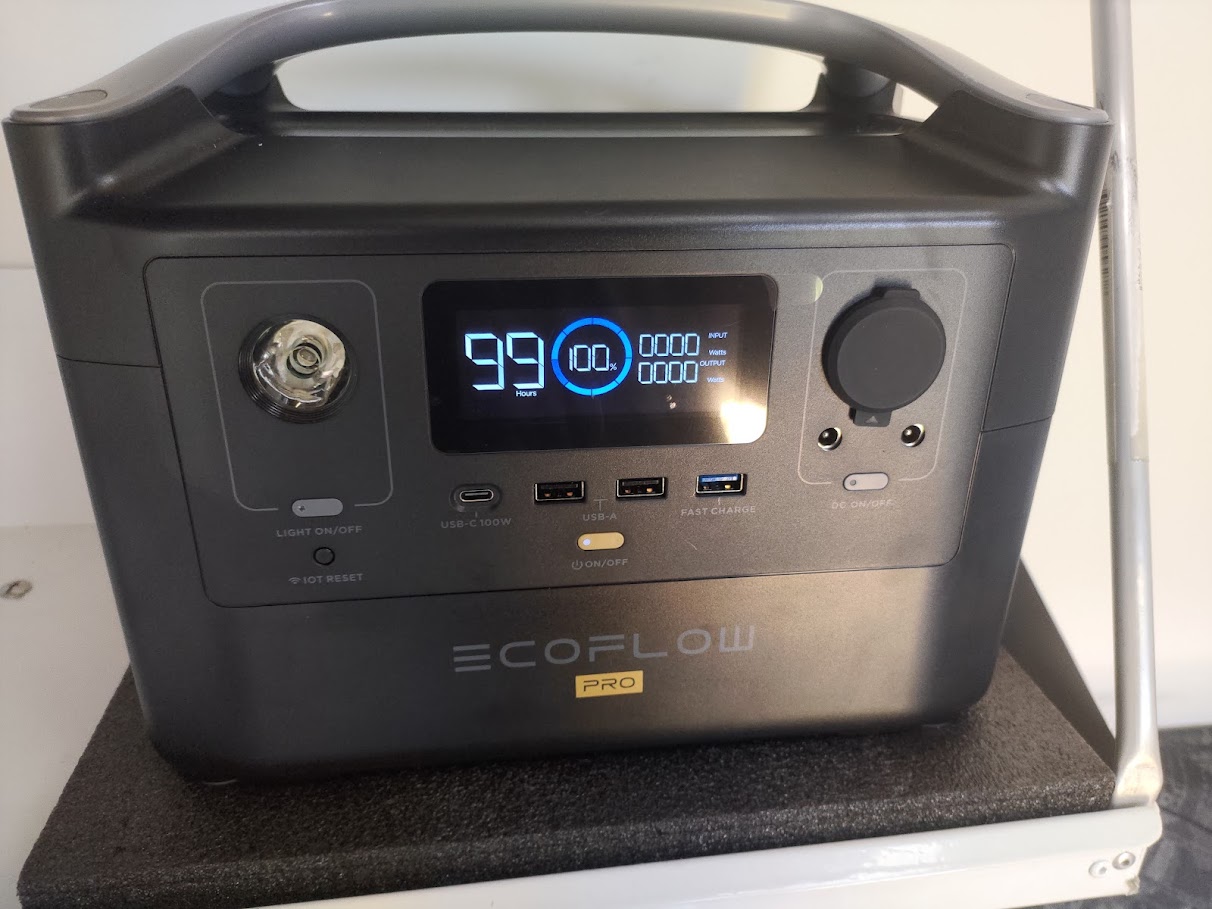
Alongside the main upgraded system, an EcoFlow River Pro was added with its own solar panels. This was intentional. It allows work to continue independently from the house system when needed and gives flexibility depending on location, weather or usage. It also means power can be allocated instead of everything fighting over the same source.

By the end of this stage, power stopped being something to think about. Devices stay on. Charging is predictable. The motorhome behaves like a working environment, not a campsite.

Now the Dojo had a pulse

Connectivity Is Everything

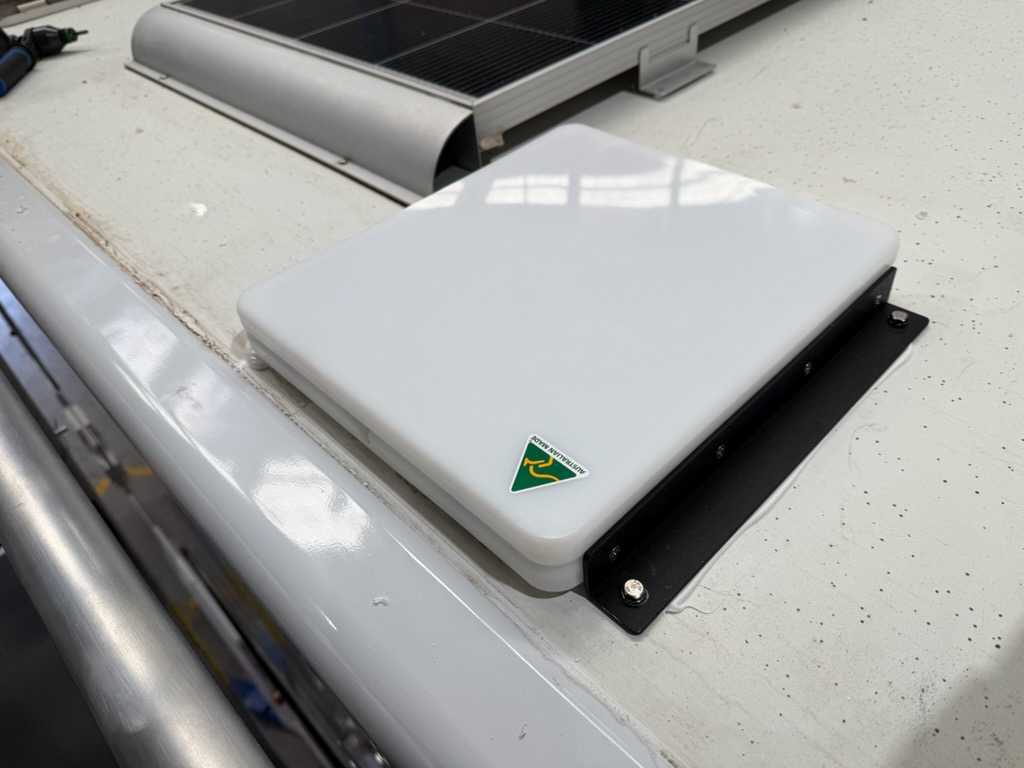
Most people worry about where they’ll camp. You worry about whether the network will hold. That’s why Starlink sits on the roof like a silent sentinel. It’s the backbone of the Mobile Dojo – your direct uplink that keeps development, support, server monitoring, and client communication alive no matter where you park.

You’re not relying on patchy caravan park WiFi or mobile hotspots. You’re plugged into a global network that moves with you, and that changes everything for how serious work can be done on the road.

The Command Console – Where the Dojo Thinks and Sees

With power sorted and satellite connected, it was time to build the brain of the machine.

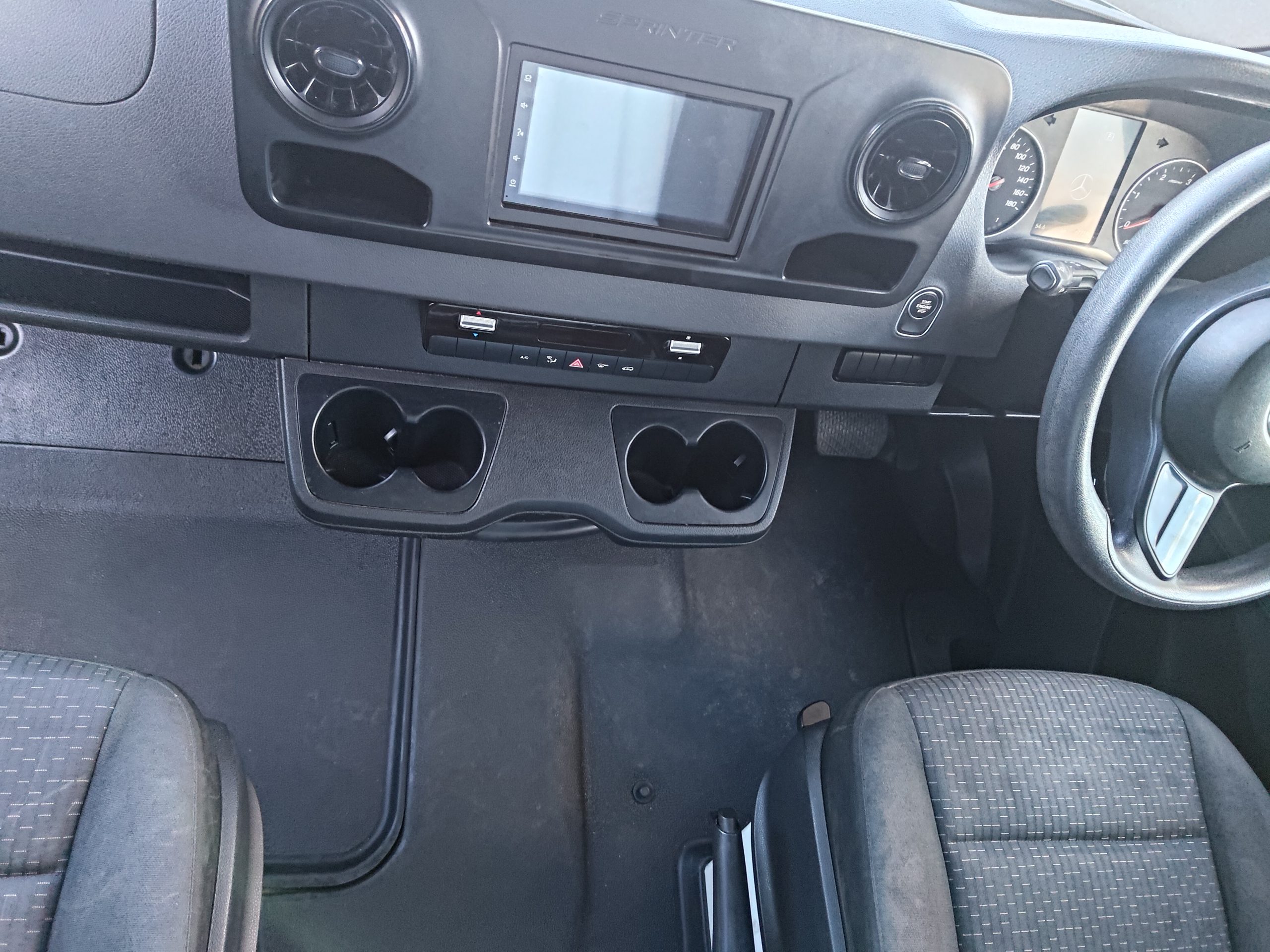
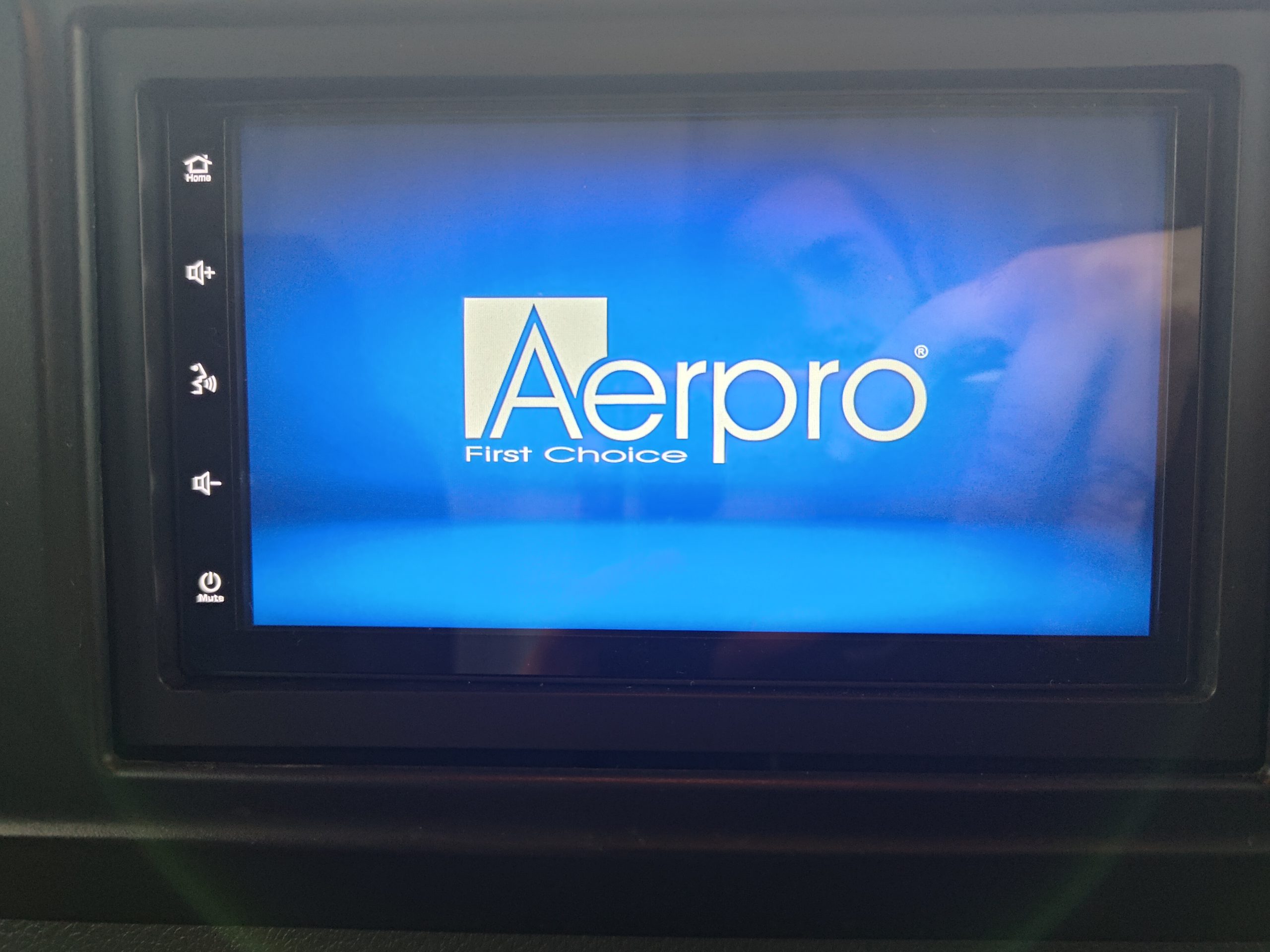
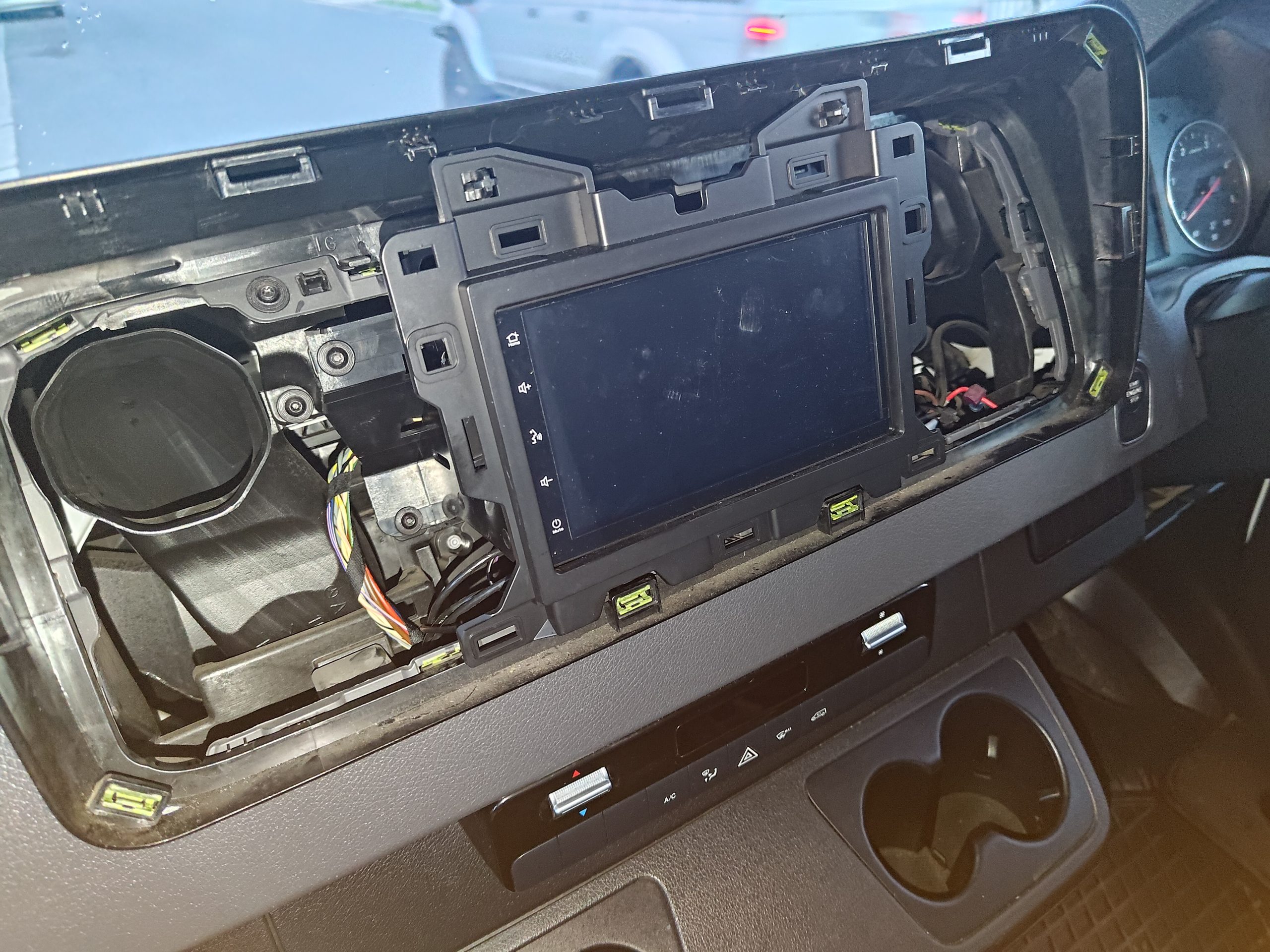
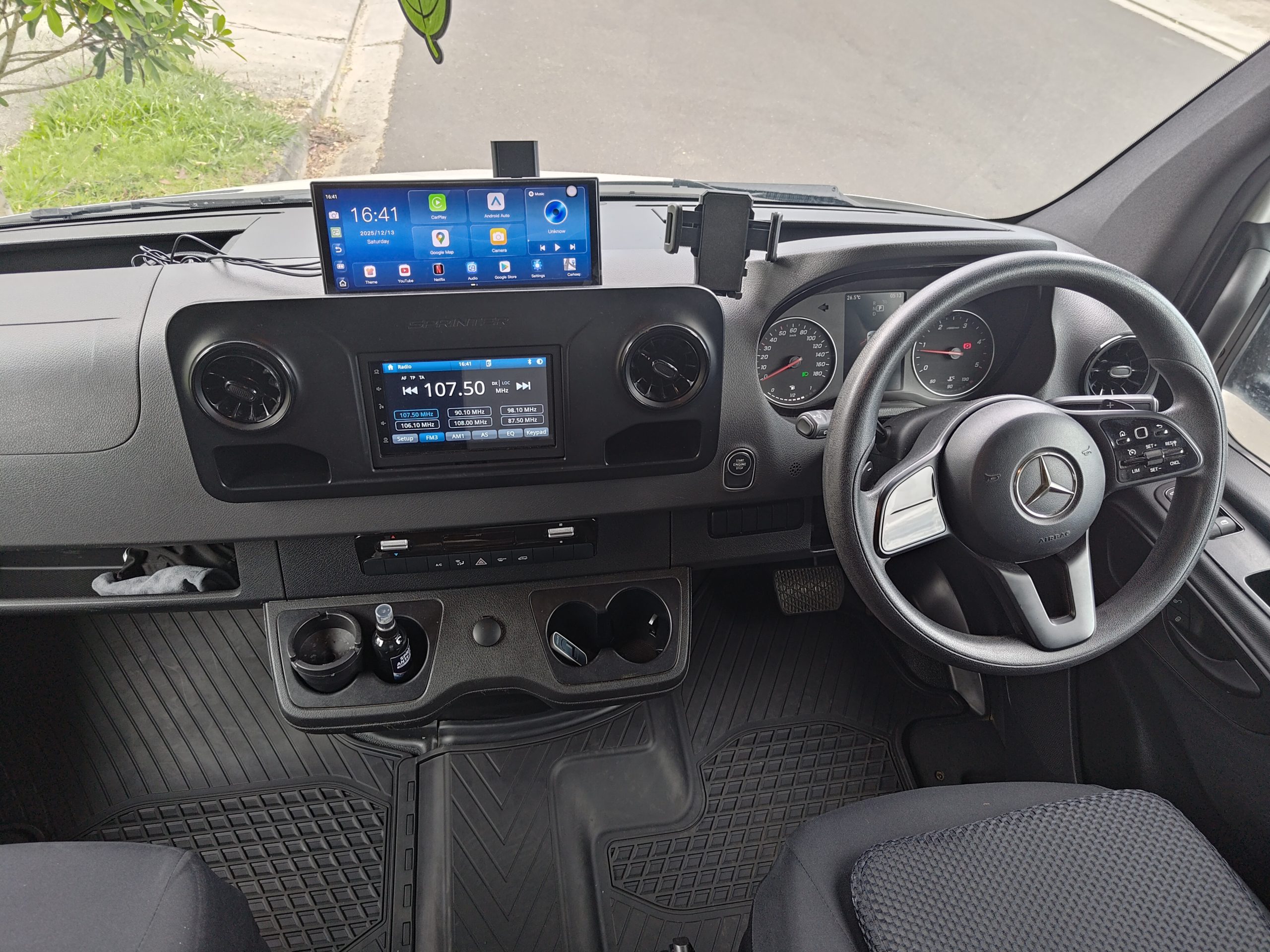
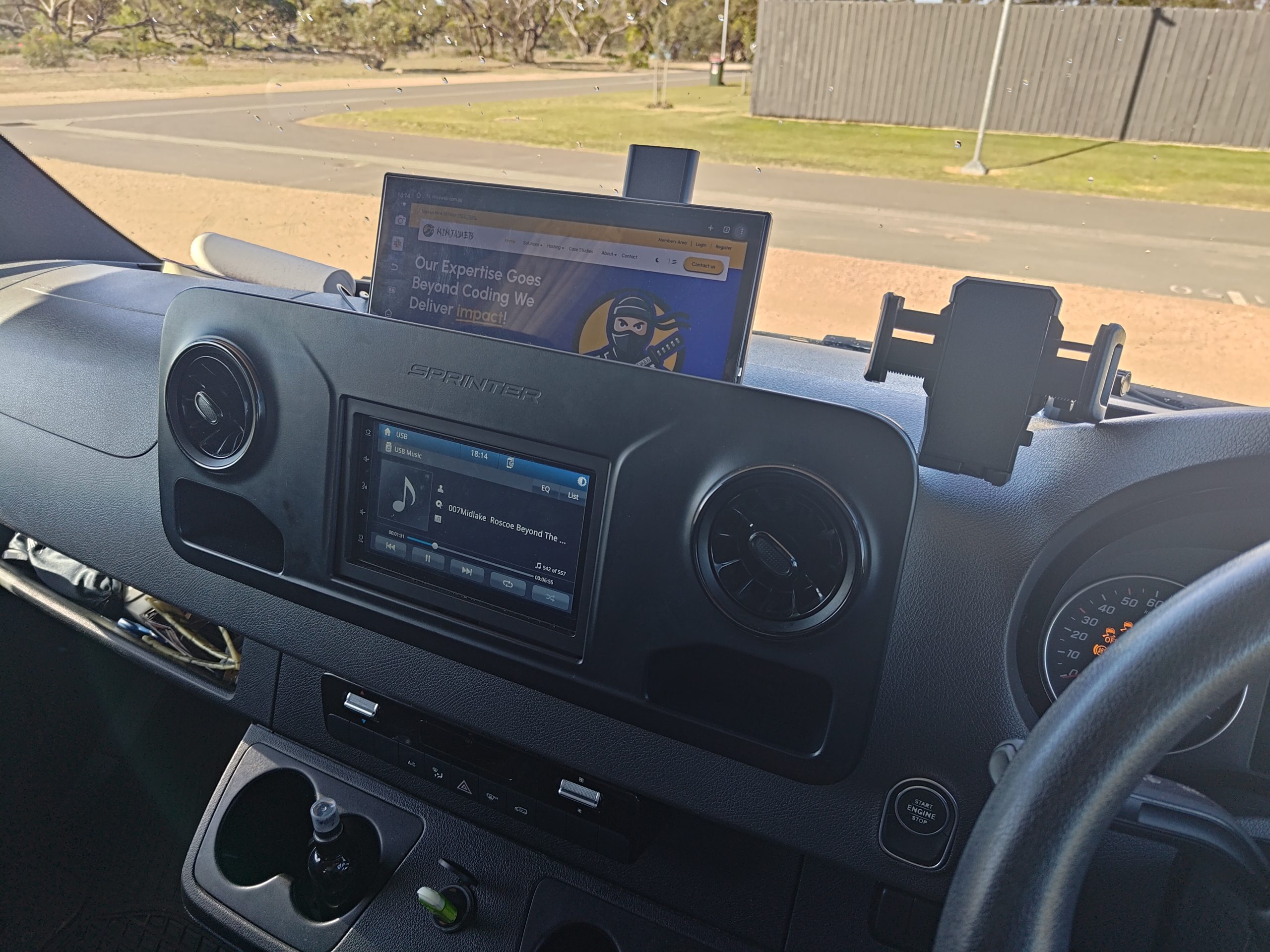
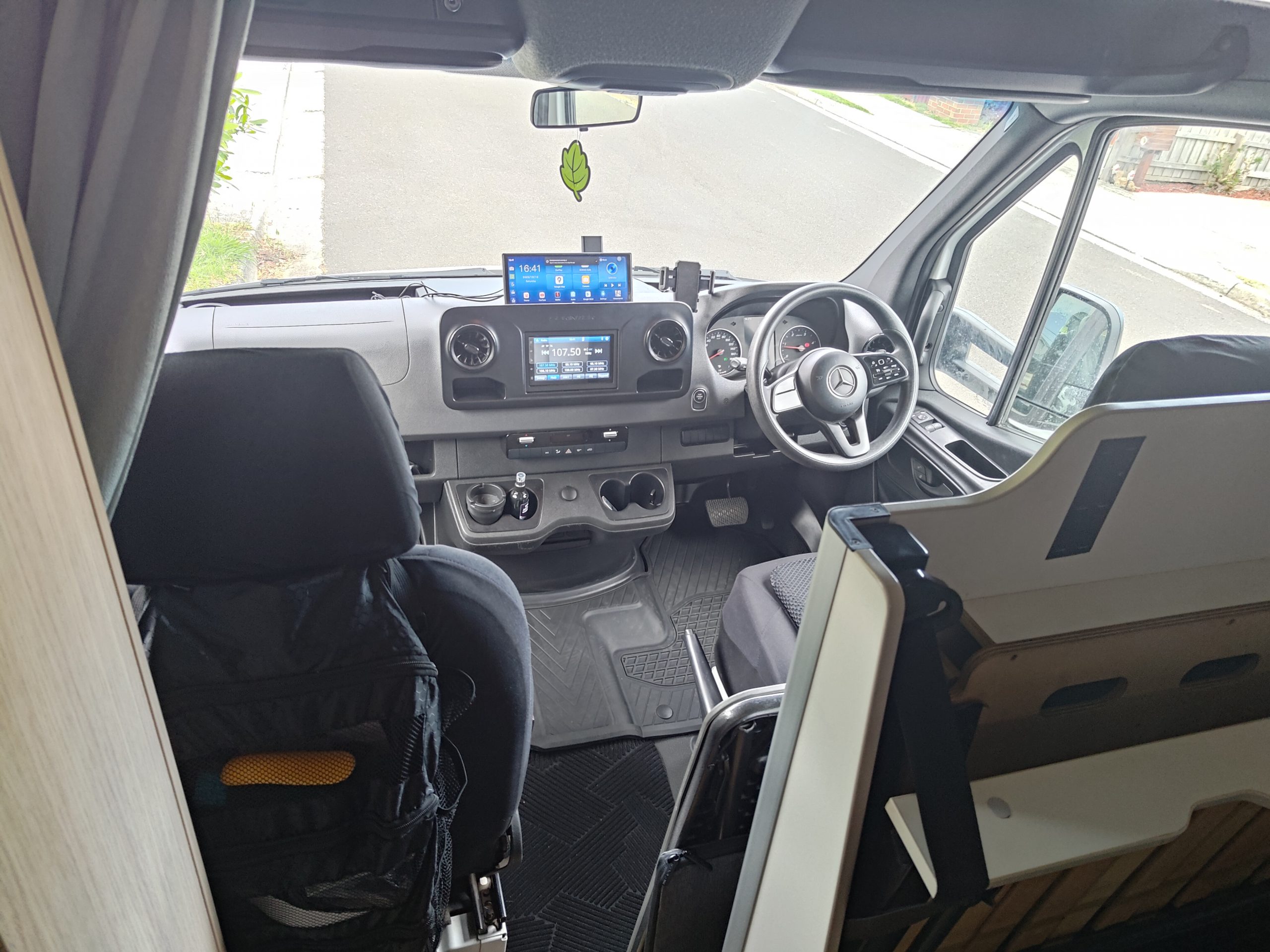
The dealership-installed Aerpro infotainment system gave the cabin a modern baseline, but it wasn’t enough for what the Dojo needed. The Imagebon M70 filled that gap instantly. It isn’t just a screen. It’s the nerve center of your road awareness and security.

The M70 runs navigation, media, and real-time monitoring, but its real value is in how it records and watches everything around the vehicle. Every drive, every stop, every moment is captured in high resolution, giving you a continuous security log that protects both you and the Mobile Dojo. Whether you’re parked at a rest stop overnight or powering through long stretches of highway, the M70 acts as a silent witness, documenting incidents, behaviour on the road, and anything worth reviewing later.

It’s also your early warning layer. With lane detection, collision alerts, and motion recording, the M70 gives the Dojo a defensive perimeter. While other systems simply play music or show maps, this one actually guards the journey. It feeds into your storytelling, your operational awareness, and your safety – making it a critical piece of the Dojo’s daily workflow rather than just another accessory.

Then came the workstation.

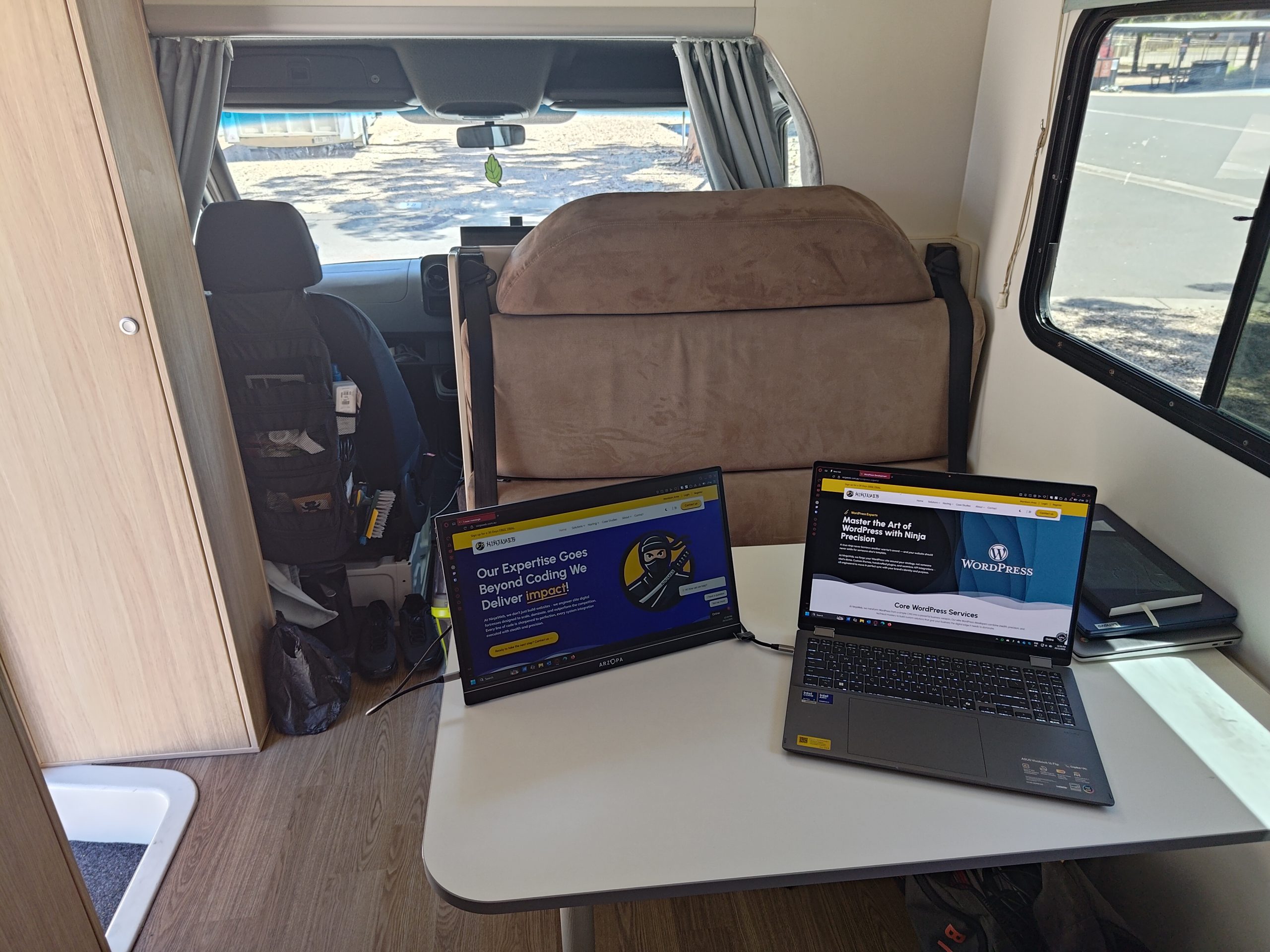
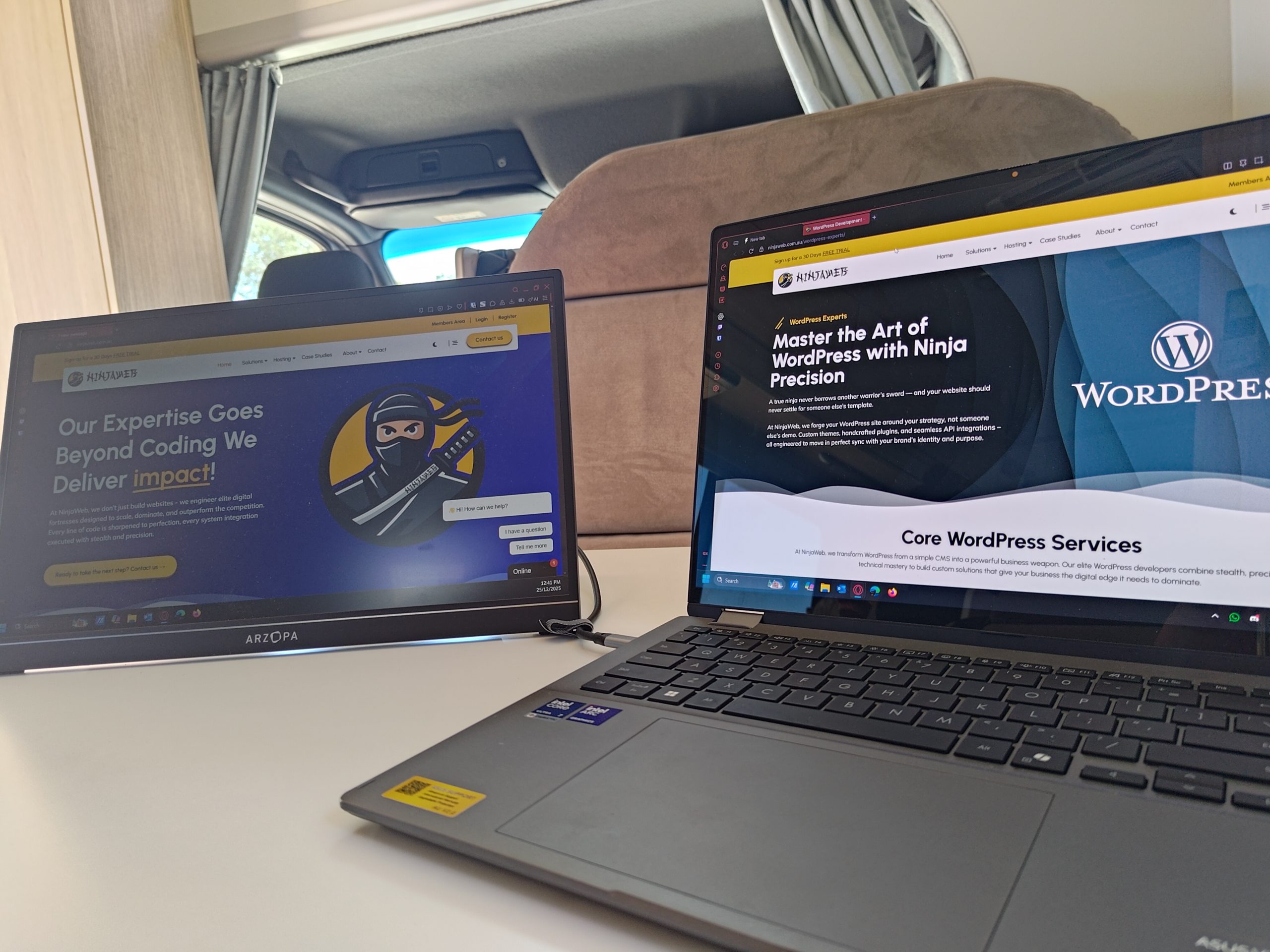
My ASUS laptop. My Arzopa portable monitor. A setup refined enough to build websites, launch campaigns, manage servers, design wraps, produce content and run NinjaWeb entirely from the highway.

Plug in. Slide into the seat. Turn the Dojo into an office instantly. Close the lid. Become a traveller again.

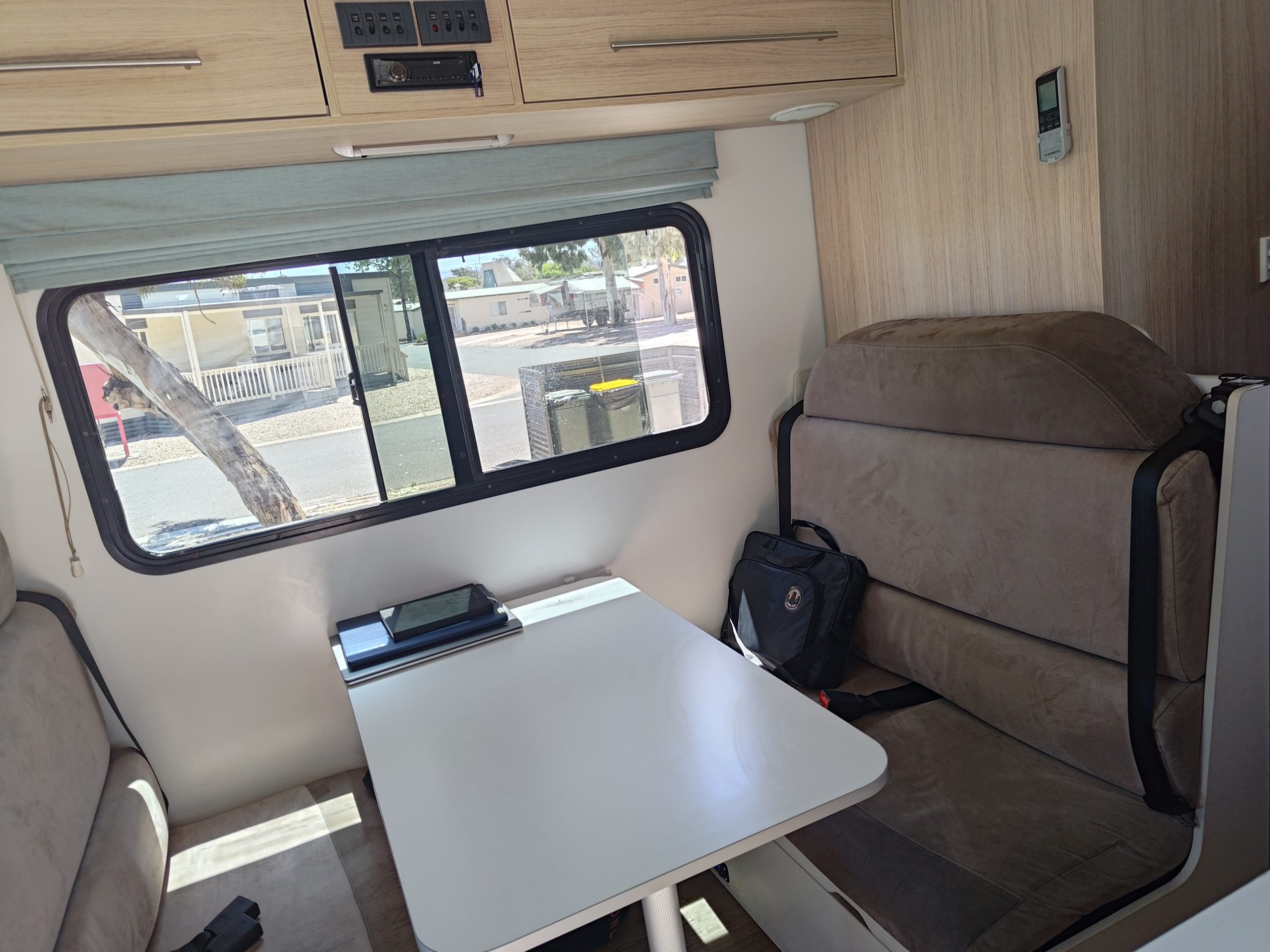
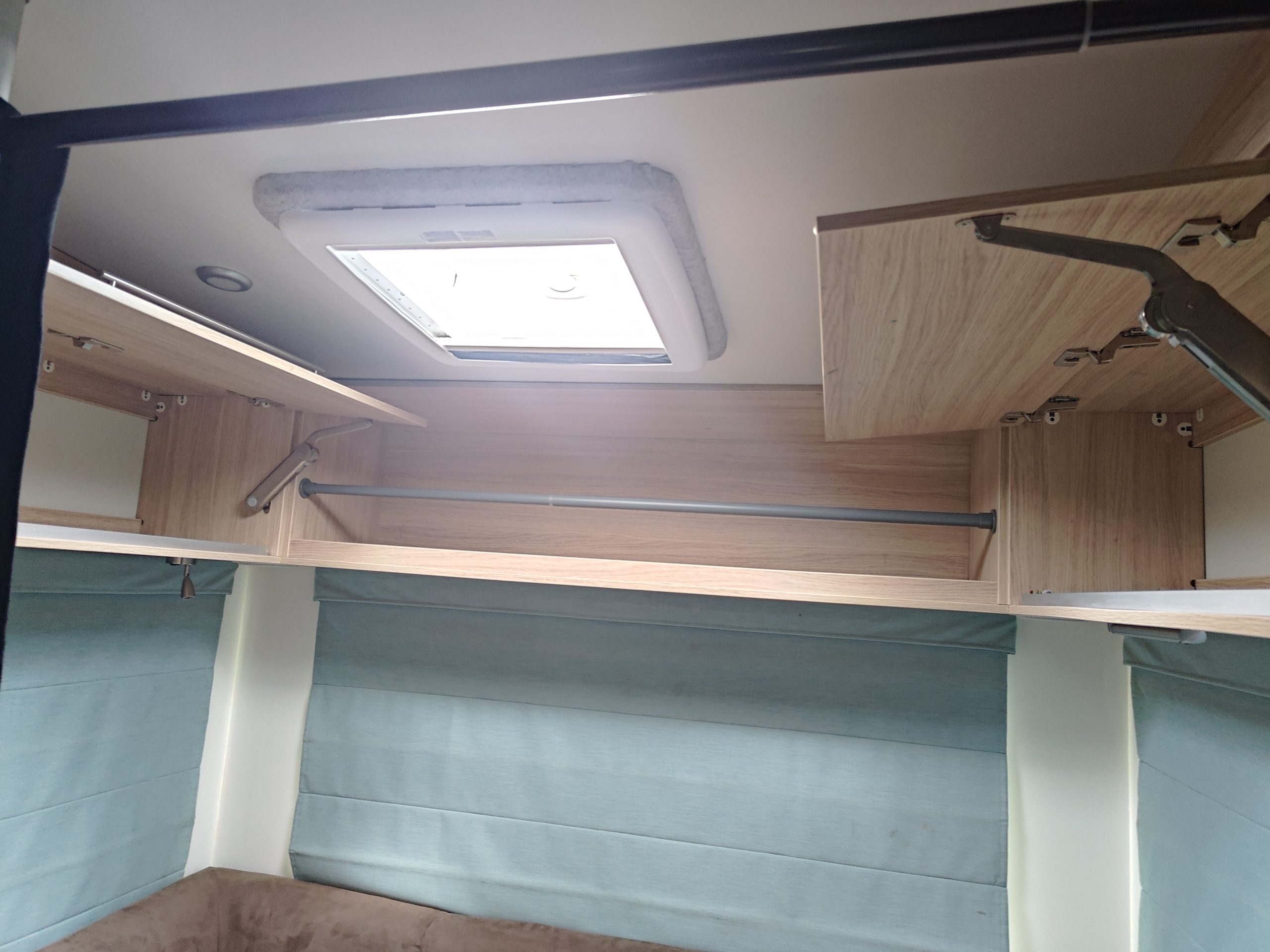
In a motorhome where every cubic centimetre matters, the challenge was to keep it all tight, efficient and ready at a moment’s notice.

Organisation – Making Space for Work and Family

This is not a solo trip. I am not travelling alone. This is a family and a business inside the same moving box.

That means bags, storage, daily items, kid gear, tech, jackets, chargers – all of it has to coexist with laptops, cameras, routers and cables without turning the van into chaos.

So I upgraded the interior with extra seat back storage, smarter placement systems, hidden compartments and strict organisation rules. Every item had a home. Every tool had a slot. Because clutter kills productivity faster than bad signal.

By the end of this phase, the motorhome wasn’t just powered or connected anymore. It had systems that could think ahead, record the journey, watch its surroundings, and keep work moving without interruption. This wasn’t infrastructure for travel. It was infrastructure for operations.

What it didn’t have yet was presence. No identity. No signal to the outside world of what it had become.

When the Van Became the Dojo

The factory graphics weren’t stripped away or ignored. They became the foundation. The existing stripes and shapes dictated the flow, and the NinjaWeb identity was layered on top with purpose. Deep blacks, sharp lines, and new elements were added in a way that followed the van’s original geometry rather than fighting it. Nothing was forced. Everything was aligned.

The approach was deliberate. By building on what was already there, the branding could be removed cleanly in the future if needed. This kept the van flexible as an asset, allowing it to return to a neutral state without damage or heavy rework.

The result wasn’t a cover-up. It was an evolution. The van still carried its original structure, but now it spoke with intent. What once looked like a generic hire motorhome now read as a branded vehicle with a clear role and presence.

Every angle mattered. Every alignment mattered. Every millimetre mattered.

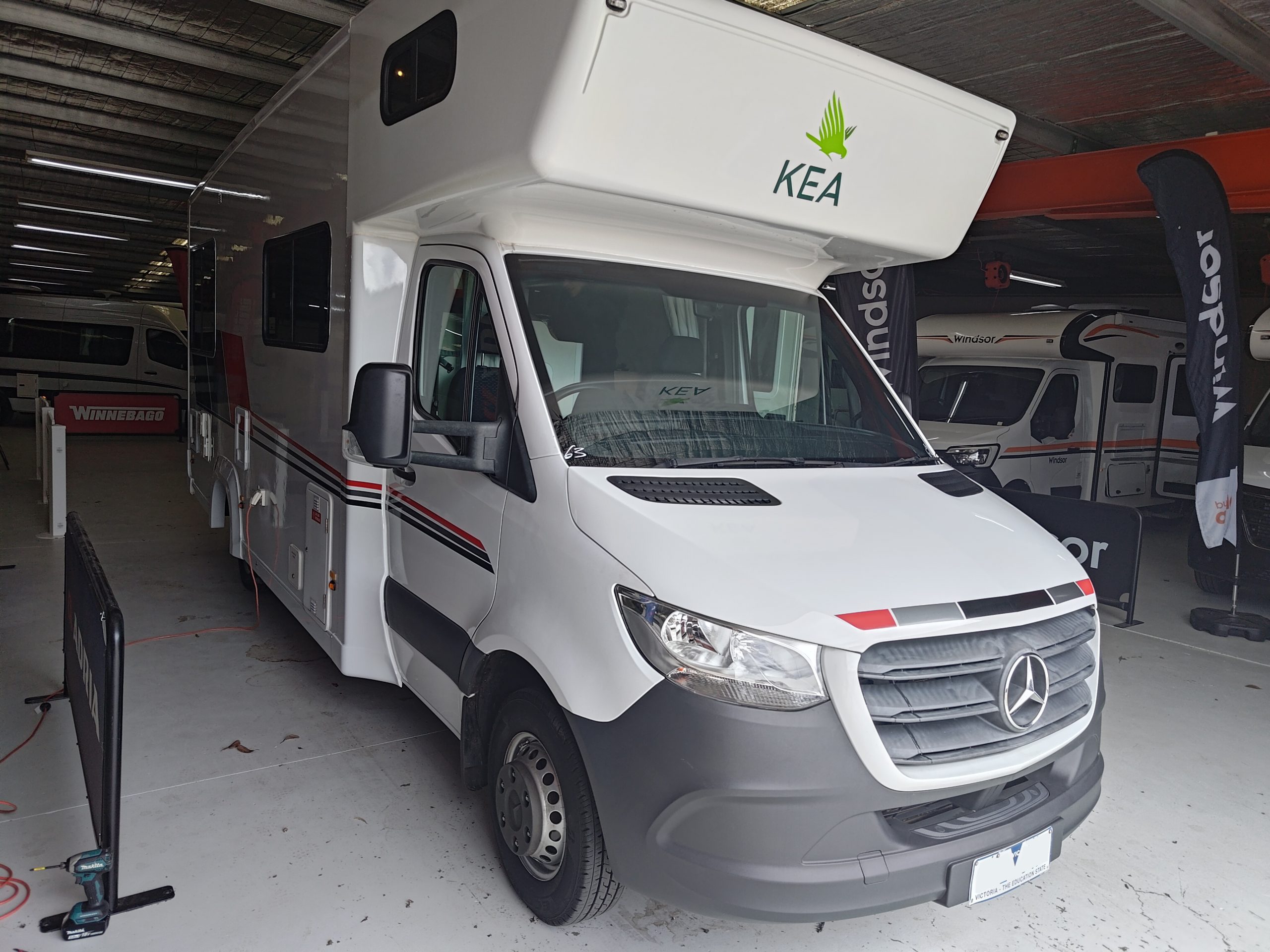
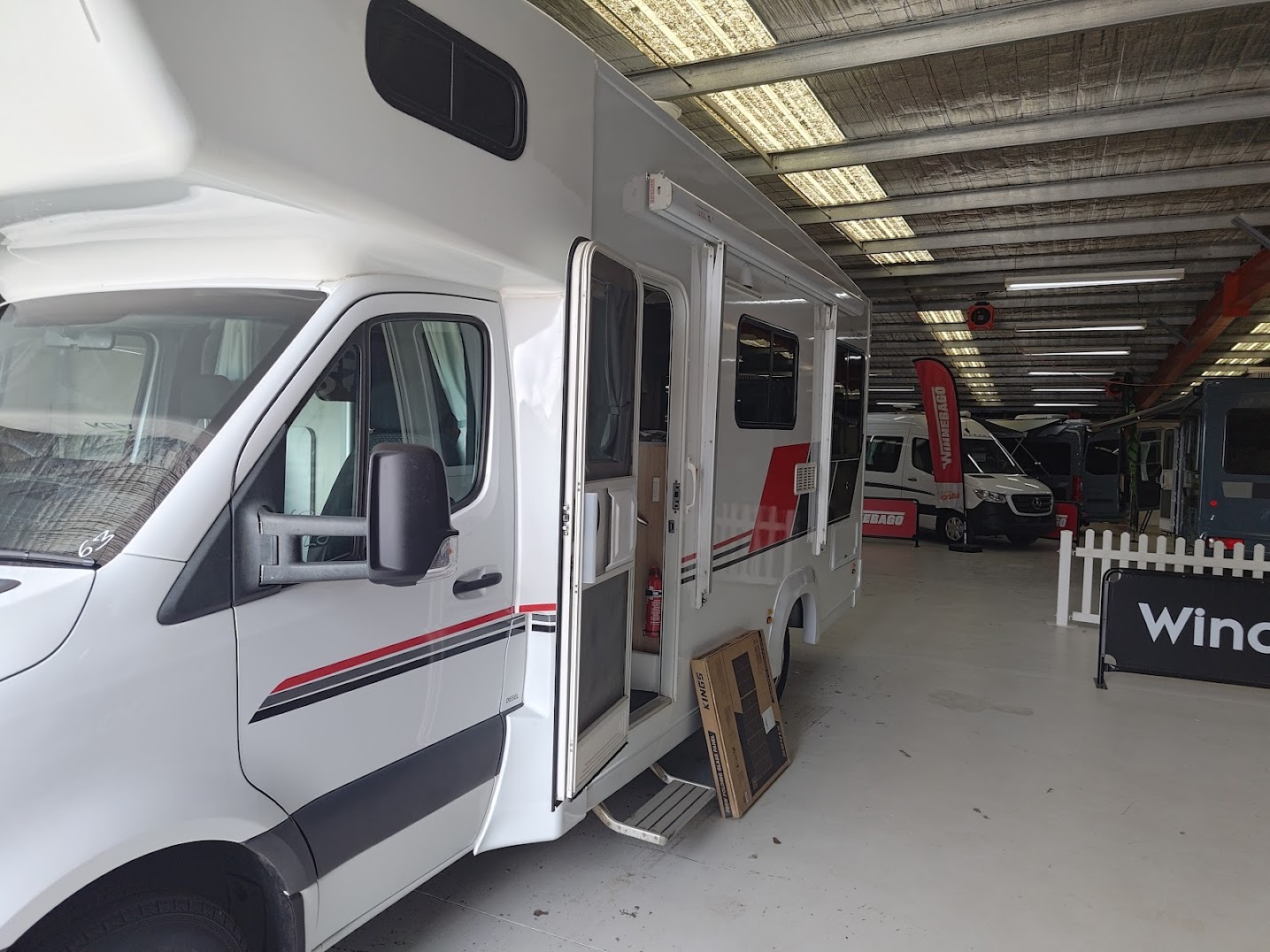
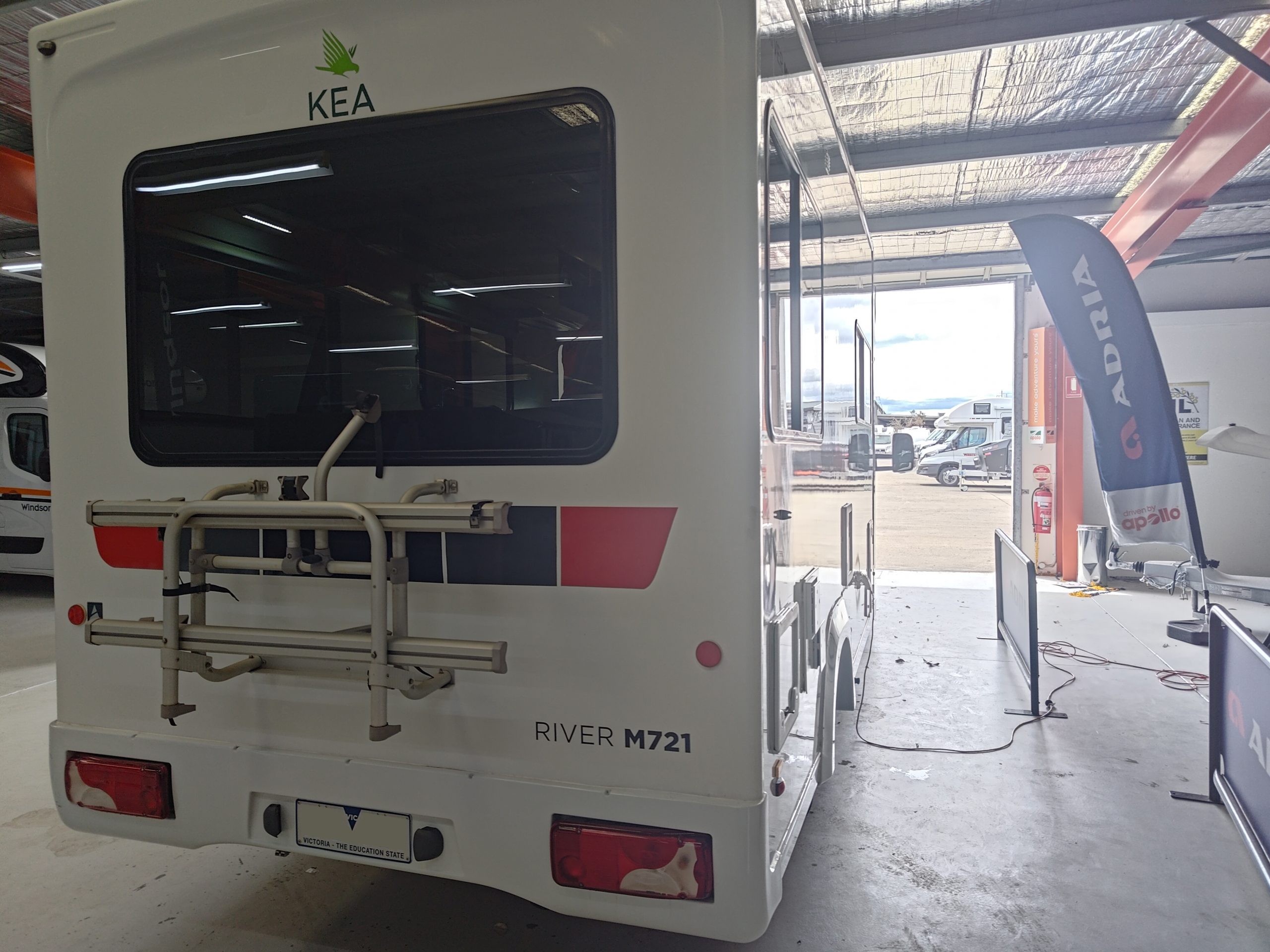
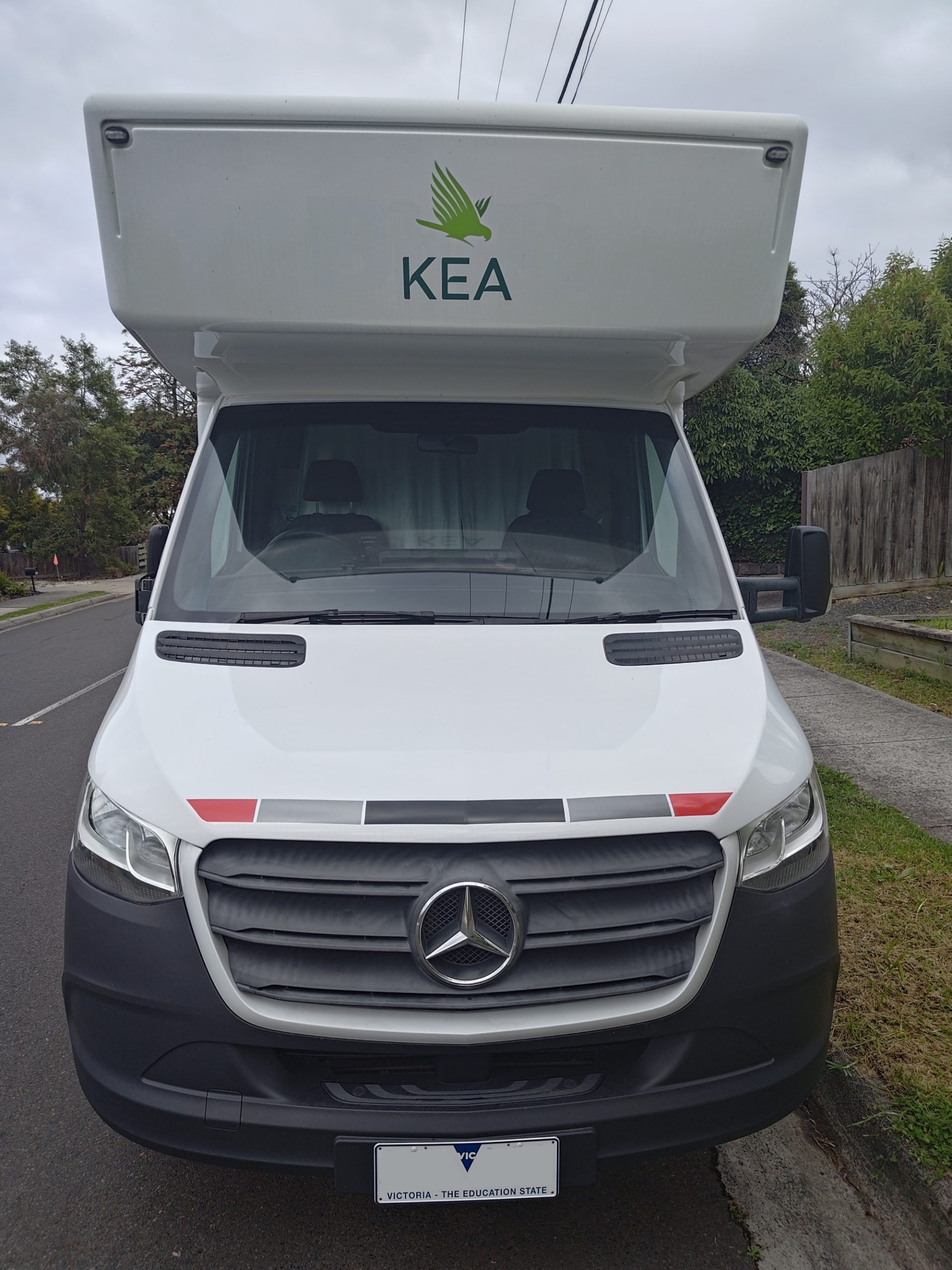
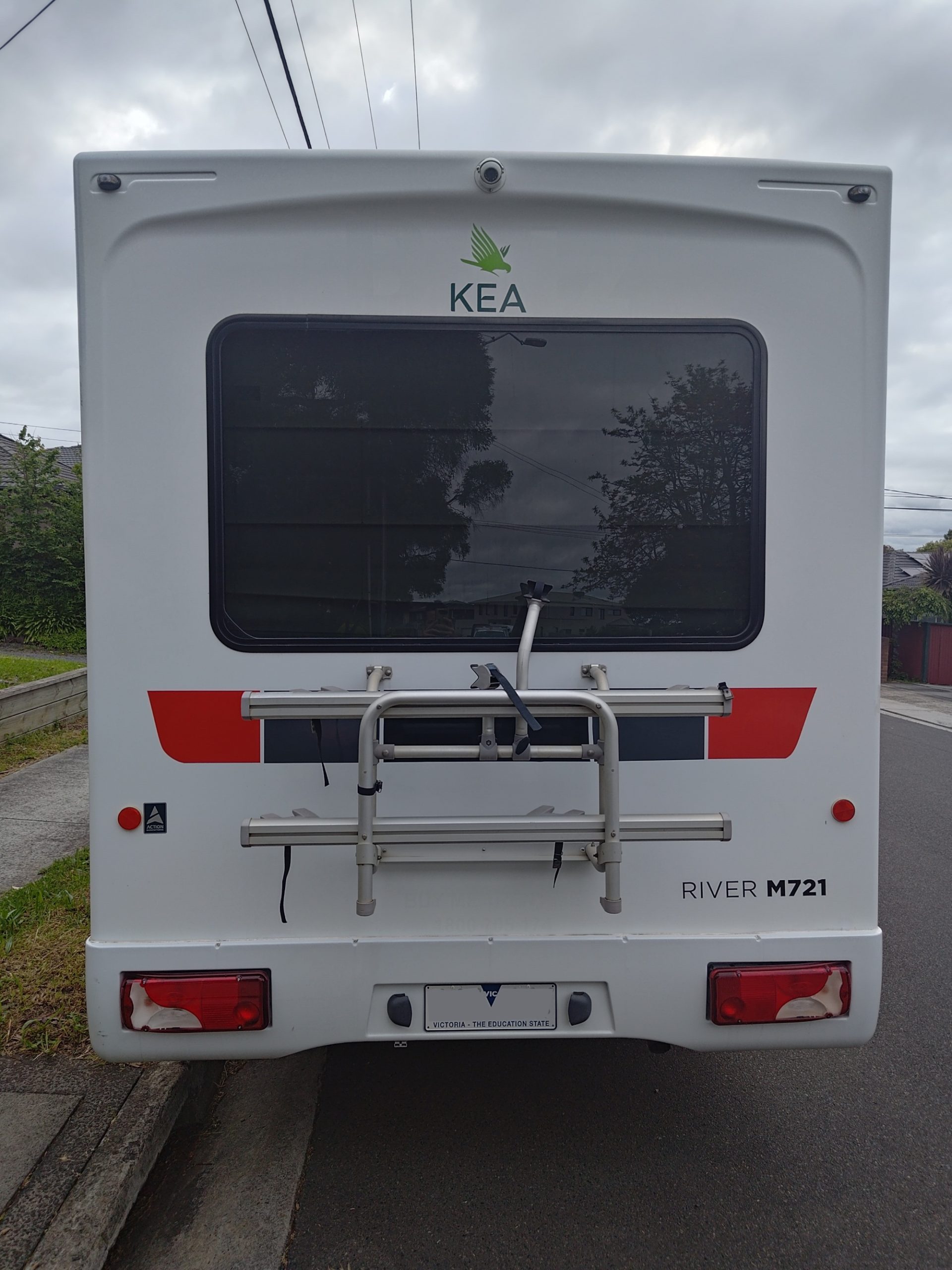
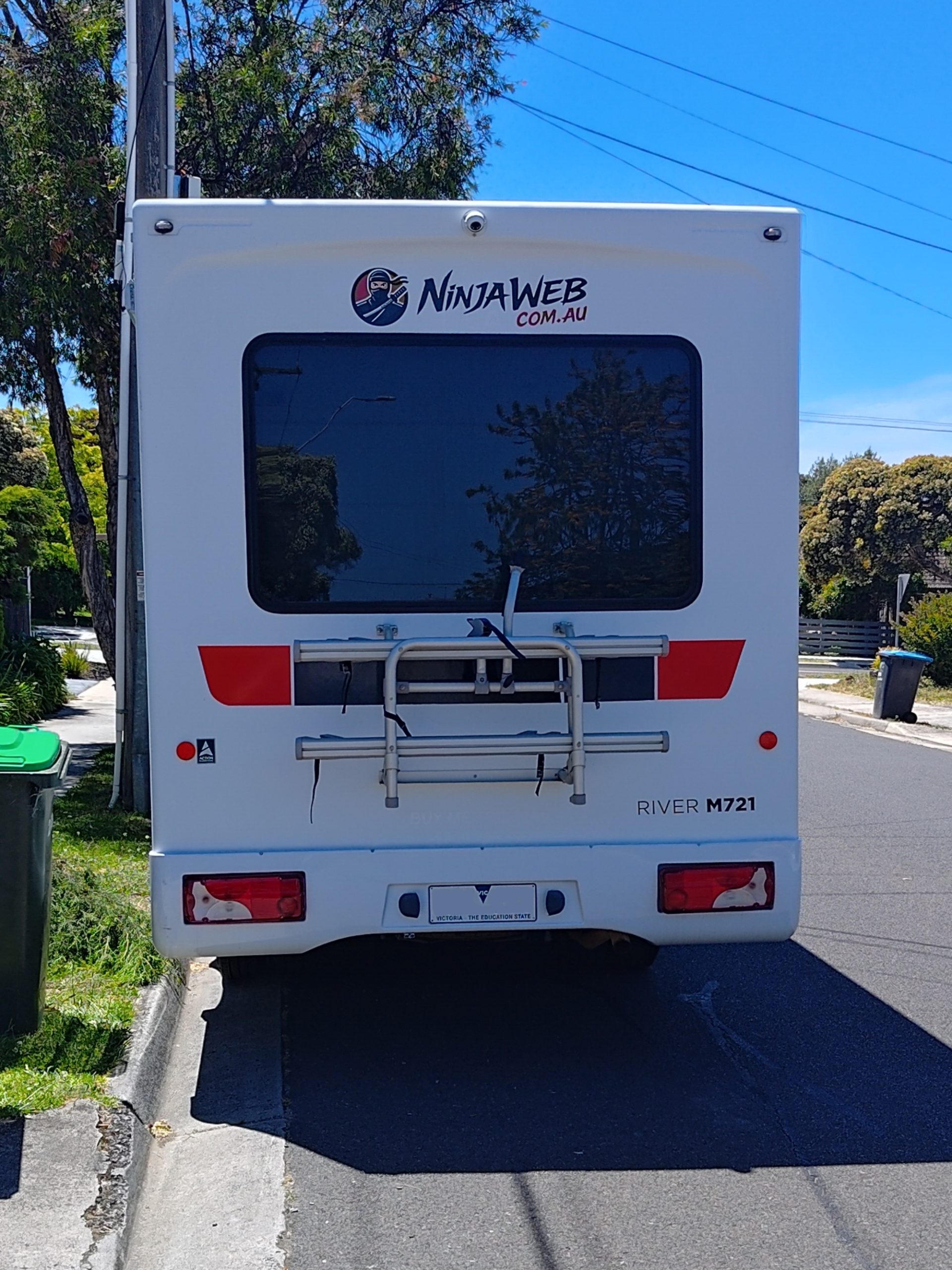
Front view of the Mercedes Sprinter KEA motorhome before branding, showing the original unwrapped exterior.
before
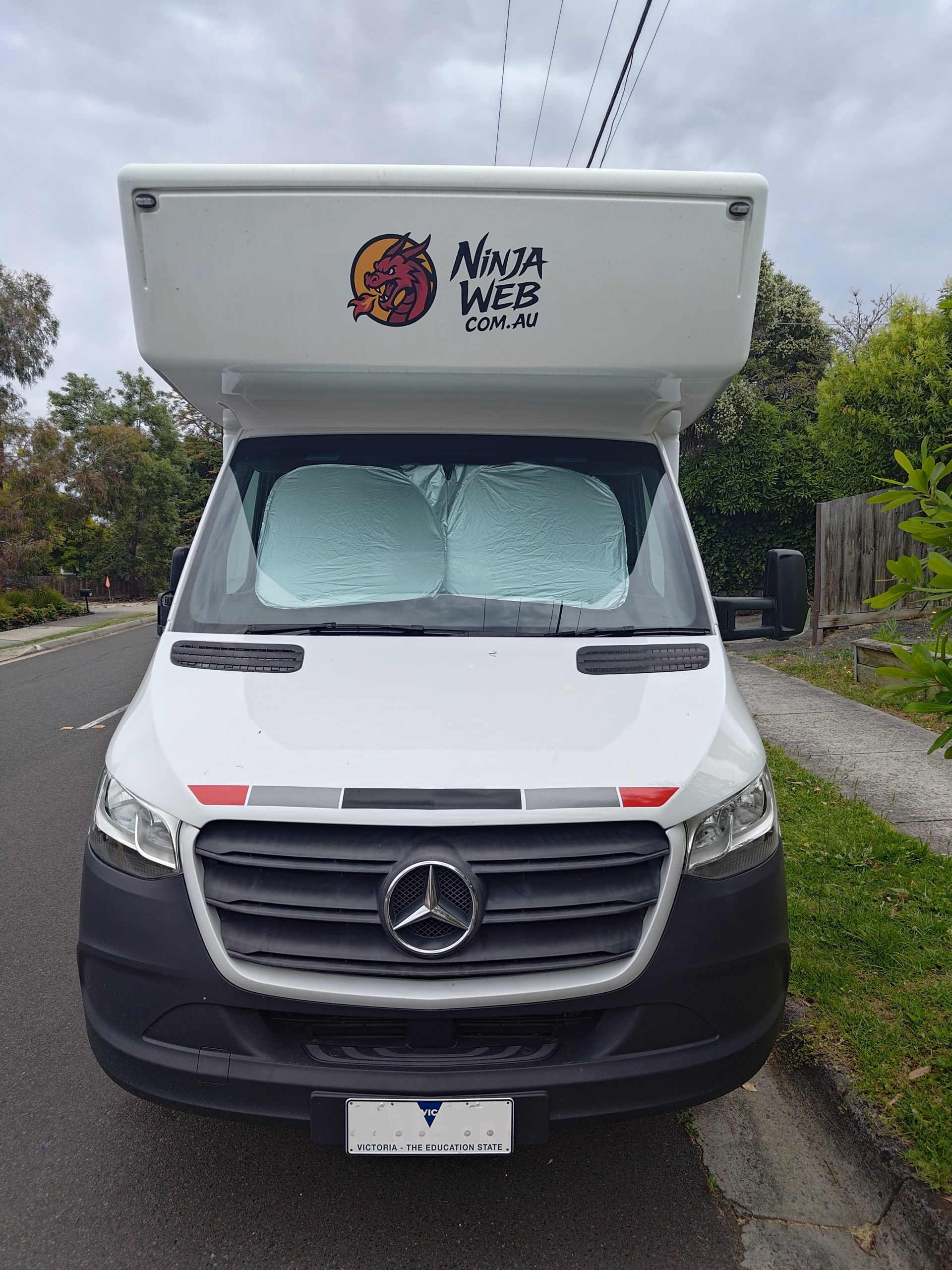
Front view of the Mercedes Sprinter KEA motorhome after NinjaWeb branding was applied.
after

The Mobile Dojo Is Complete

What started as a budget conscious purchase turned into a full scale mobile command center capable of running NinjaWeb anywhere in Australia.

Power. Connectivity. Monitoring. Workstations. Organisation. Identity.

Piece by piece, the van transformed into the Mobile Dojo – a digital agency running from the road without losing speed, quality or ambition.

The road is not a limitation. It is just the new headquarters.

Why This Works

Traditional businesses assume stability belongs inside buildings. The Mobile Dojo proves the opposite. When you strip away the unnecessary and reinforce the mission-critical, mobility becomes an advantage, not a handicap.

Clients don’t see improvisation. They see commitment. They see a brand that doesn’t pause just because the scenery changes. They see an agency capable of delivering from Melbourne, Perth, Darwin, Cairns, or the middle of nowhere – without excuses.

This isn’t about escaping an office. It’s about outgrowing the idea that work must be tied to a location at all.

Where We Go Next

The Melbourne to Perth route is already locked in. Dates, stops, fuel planning, campsites, risks – all mapped. And this is only the first arc of a much bigger journey. The next legs will take the Dojo further across the country, deeper into the Digital Ronin story, and into a new way of how NinjaWeb operates.

The Mobile Dojo isn’t a project to finish.
It’s a way of working that moves with us.

The journey continues beyond this page.
We’ll be sharing updates, photos, and moments from the road across our channels:

– NinjaWeb on LinkedIn
– NinjaWeb on Facebook
– Georgios on LinkedIn, for more personal insights along the way

And if you cross paths with the Dojo on the road, step out of the shadows and say hi.

Share this Post