


Contact Info
106 Anne Rd, Knoxfield VIC 3180, Australia
+61 (03) 82023009
info@ninjaweb.com.au
Contact usRecommended Services


Supported Scripts
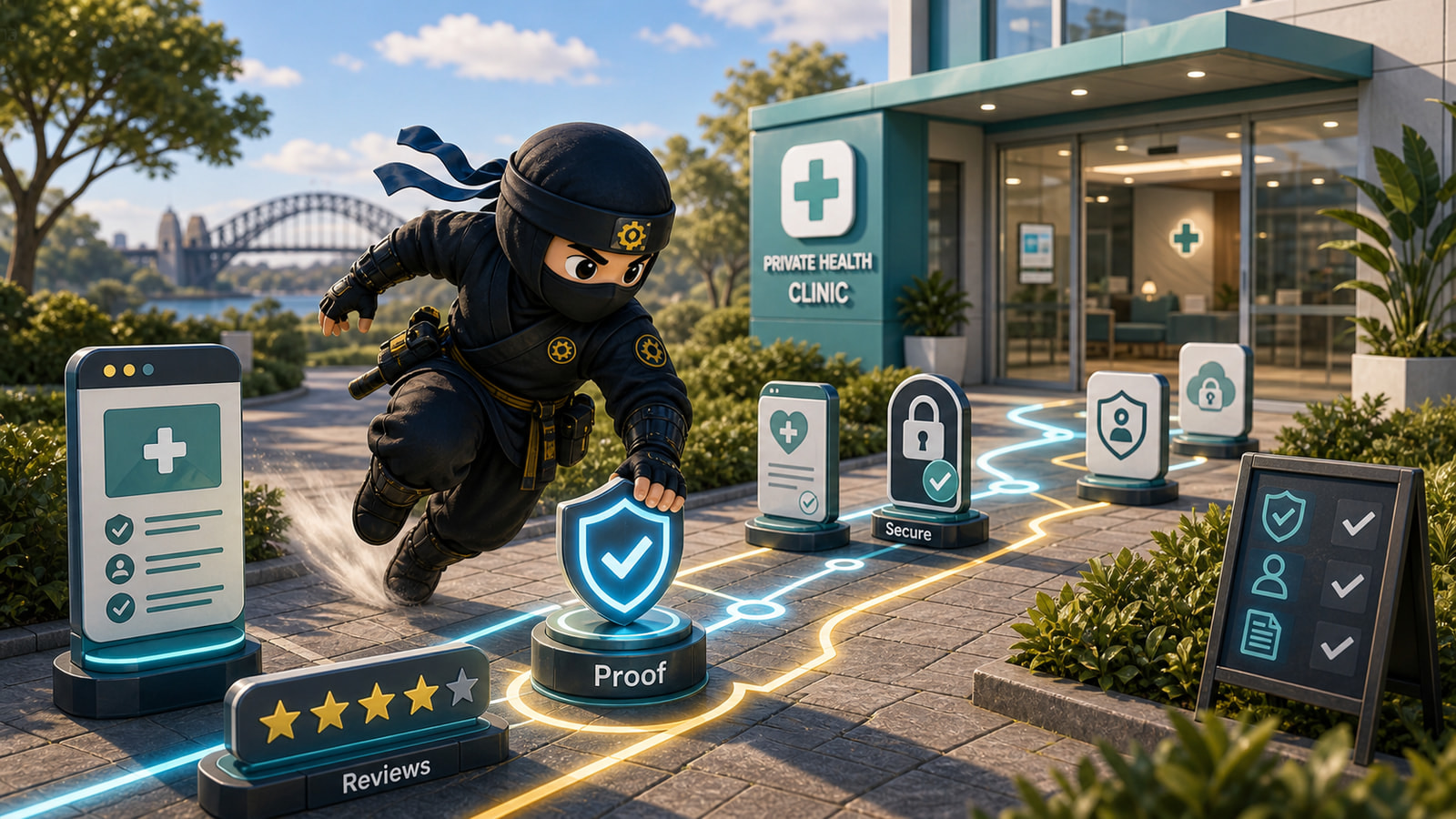

Private Health Services need digital proof before patients enquire. A private patient is not only looking for a service. They are trying to decide whether the provider feels credible, careful and appropriate before they share personal information or take the next step.
That decision often happens silently. The visitor reads the page, checks the tone, looks for proof, compares options, judges privacy cues and decides whether the service feels serious enough. If the website is thin, vague or too sales-heavy, the enquiry may never happen.
The provider may think the page is doing its job because it exists. The patient may see something very different.
Private Patients Need Confidence Before Contact
Private health decisions carry more emotional weight than ordinary purchases. The visitor may be worried, embarrassed, uncertain, busy or comparing sensitive options. They may not want to call first. They may not want to explain their situation until they believe the service is worth trusting.
The website should respect that. It should explain the service clearly, show who it is for, outline the first step, avoid vague promises and give enough context for a careful person to continue. It should feel professional without sounding cold, and confident without sounding pushy.
This is not about giving medical advice. It is about making the digital path responsible enough for a private enquiry.
That responsibility also affects what should not be said. Private health pages should avoid sounding like a hard-sell landing page. They should not pressure the reader with false urgency or broad claims. The stronger path is usually quieter: describe the service, explain the process, protect privacy and make the next step feel safe.
Proof Has to Be Visible, Not Assumed
Many private health providers assume their professional credibility is obvious. Online, it rarely is. The visitor may not know the provider, the clinic, the process or the difference between similar services. The page has to carry more of that work.
Useful proof may include clear service boundaries, practitioner context where appropriate, process explanation, privacy-aware forms, patient suitability guidance, location clarity, appointment expectations, follow-up information and a calm tone. It may also include case-style explanations that describe the kind of problem the service solves without exposing private details.
The proof should reduce uncertainty. It should not feel like marketing noise. A private patient wants to know whether the service understands the situation, not whether the website can shout the loudest.
Proof also needs structure. If the important details are scattered across the site, the visitor may never find them. A strong page brings the right information together: what the service is, who it may suit, how enquiry works, what happens after submission, and what kind of response the patient can expect.
Trust Breaks When the Site Feels Generic
Generic health pages create a specific problem. They may sound safe, but they do not help the patient decide. If every page says compassionate care, expert team and tailored solutions, none of it feels specific. The visitor still has to guess whether this service is right for them.
A better page answers practical questions in a human way. What kind of person is this service for? What happens after an enquiry? What information should be prepared? Is the first step private? Is the service urgent, planned, ongoing or consultative? What should the patient expect from the process?
This is where generic templates fail. They can make a provider look polished while still leaving the real decision unsupported. The patient does not need more decorative sections. They need the confidence that someone has thought through the questions they are afraid or too busy to ask.
NinjaWeb has written about decisions under pressure in Decision Making Under Pressure. That same pressure exists in private health research. A page that removes confusion can make the next step feel safer.
How NinjaWeb Would Approach It
NinjaWeb would start by auditing the trust path. Which pages are supposed to create private enquiries? Does the service explanation carry enough proof? Does the form feel safe? Does the page show the first step without overpromising? Are claims supported? Is the mobile layout calm enough for someone reading carefully?
From there, the work may include service page structure, copy, proof hierarchy, privacy-aware forms, internal links, mobile usability, speed and conversion tracking. The goal is not to make health services aggressive. The goal is to make serious enquiry feel clear, private and appropriate.
The same commercial restraint matters in other serious markets too. NinjaWeb discussed calm trust for money-sensitive buyers in business website planning. Private health needs a similar discipline: clarity first, hype last.
Private health services cannot rely on a generic website and hope patients fill in the gaps. The digital proof has to be there before contact, because the most important decision may happen before the provider even knows the patient exists.
Share this Post