


Contact Info
106 Anne Rd, Knoxfield VIC 3180, Australia
+61 (03) 82023009
info@ninjaweb.com.au
Contact usRecommended Services


Supported Scripts
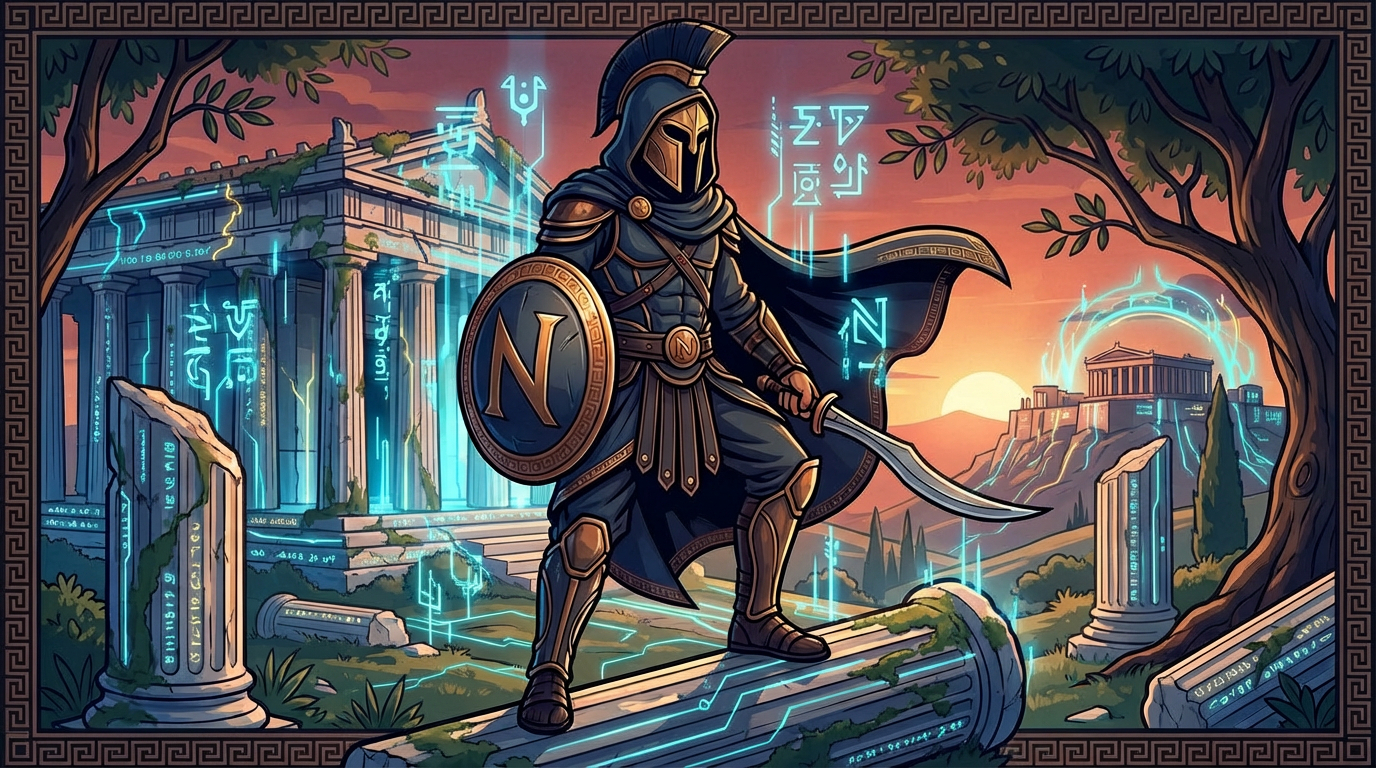

Ancient Greece is often remembered for philosophy and mythology. That is surface-level thinking. What actually made it work was structure.
Cities like Athens and Sparta operated on systems. Not assumptions. Not trends. Systems.
Most modern businesses do not.
Structure Before Expansion
Ancient Greek cities were designed. Roads connected critical points. Supply chains were predictable. Communication was controlled.
Nothing was random.
Modern businesses often do the opposite. They launch first, structure later.
Websites are built quickly. Pages are added without hierarchy. Systems are patched over time.
This creates instability.
A system that is not structured will fail under pressure.
Infrastructure Was Non-Negotiable
Ancient systems depended on reliable foundations. Without supply lines, cities collapsed. Without coordination, expansion failed.
The modern equivalent is infrastructure.
Hosting, servers, performance.
If your infrastructure is weak, everything built on top of it becomes unreliable.
Most businesses underestimate this. They invest in design and marketing while ignoring the base layer.
That imbalance always shows.
Discipline Over Reaction
Sparta did not react to problems. It prepared for them.
Modern systems are often reactive.
Security is added after issues appear. Performance is optimized after complaints. Backups are considered after failure.
This is not discipline. This is delay.
Strong systems are built with constraints from the start:
- Restricted access
- Controlled exposure
- Continuous monitoring
Without discipline, systems degrade over time.
Visibility Was Structured
Ancient Greece understood influence.
If you were not present in the public space, you had no reach.
Modern equivalent is search visibility.
But visibility today is often approached incorrectly.
Businesses create random content without structure.
What works is systematic coverage:
- Clear service hierarchy
- Location-based expansion
- Internal linking
- Consistent page structure
Visibility is not created manually. It is deployed through systems.
Scaling Was Controlled
Expansion in Ancient Greece was supported.
Every move required infrastructure, coordination, and control.
Modern businesses try to scale without these.
More traffic. More pages. More services.
Without structure, this creates failure points.
Real scaling requires:
- Stable infrastructure
- Repeatable systems
- Automation where needed
- Defined limits
Without these, growth becomes instability.
Conclusion
Ancient Greece outperformed modern businesses in one critical way.
It respected systems.
Not appearance. Not shortcuts. Not noise.
Systems.
If your business lacks structure, it will fail under pressure.
If it is built correctly, it will hold, scale, and survive.
The difference is not time or technology.
It is discipline.
Share this Post