


Contact Info
106 Anne Rd, Knoxfield VIC 3180, Australia
+61 (03) 82023009
info@ninjaweb.com.au
Contact usRecommended Services


Supported Scripts
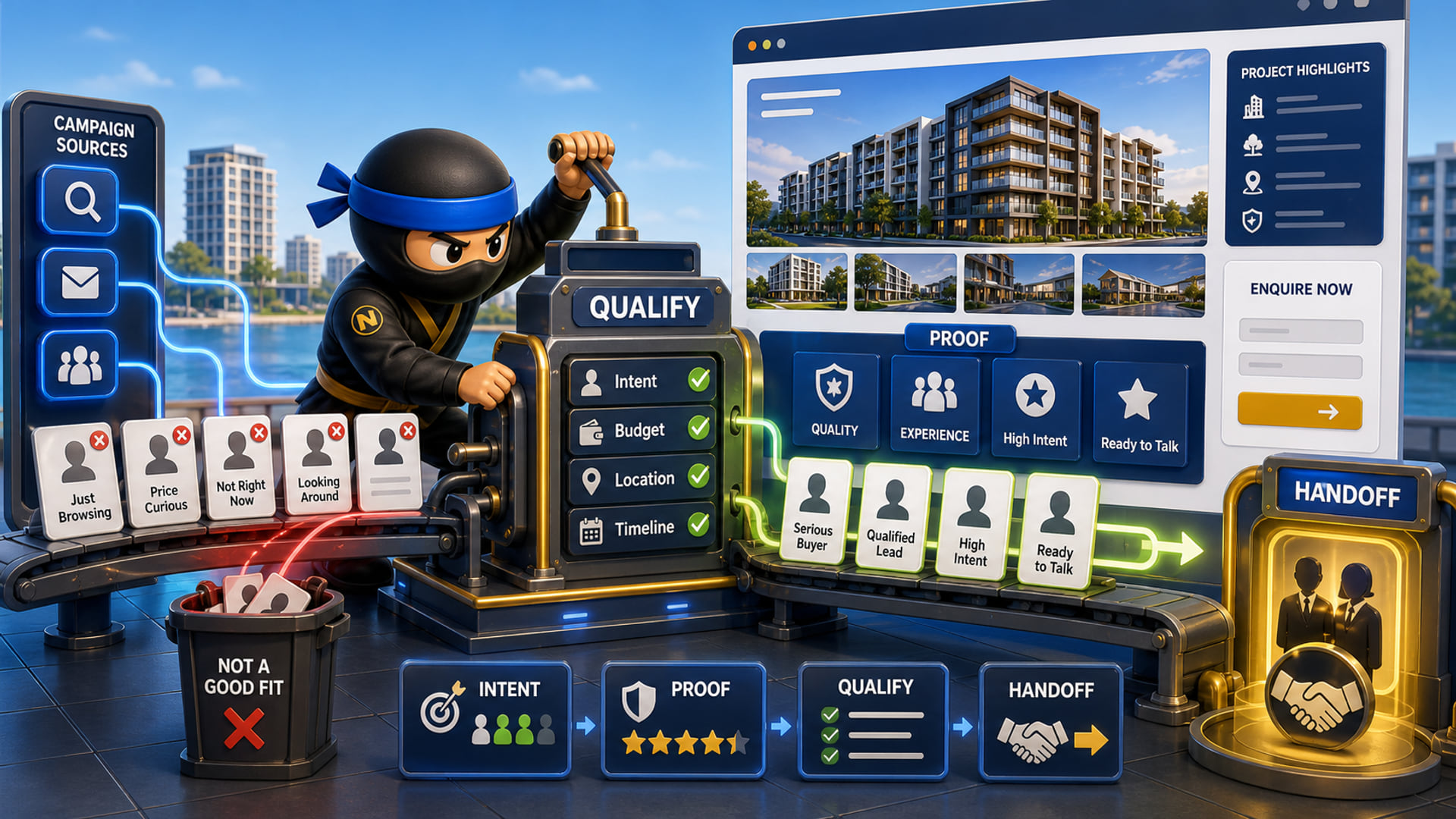

Property developers do not need a website that simply shows finished photos. Property developers need a website that separates serious buyers, investors, agents, partners, and casual browsers before the first conversation starts.
A development project may look impressive, but the website still has to do operational work. It should explain the project clearly, show enough proof to reduce doubt, guide the right enquiry type to the right person, and stop the sales team from wasting time with low-context messages.
The Website Should Qualify Before It Impresses
Beautiful renders can create attention, but attention is not qualification. A serious buyer wants to understand location, stage, availability, pricing context, delivery confidence, finance relevance, and who is actually behind the project. If the site hides those details behind a glossy gallery, it forces the wrong conversation.
The first screen should make the type of opportunity clear. Is this for owner occupiers, investors, commercial buyers, agents, builders, or partners? The page should not make every visitor enter the same enquiry path.
That does not mean dumping every detail above the fold. It means giving enough direction that the right person knows they are in the right place.
For a development campaign, that direction also protects the team. If every visitor sees the same vague promise, the wrong people enquire with the wrong expectations. Clear qualification saves the sales team from doing basic website work over the phone.
Proof Needs To Match The Size Of The Decision
Property buyers and project partners are not judging a cafe menu. They are making a high-value decision with timing, trust, and risk attached. The proof has to match that pressure.
- Show project stage and what is actually available.
- Explain who is responsible for delivery and communication.
- Use location context, not only lifestyle language.
- Make the difference between enquiry, inspection, and investor contact clear.
- Keep documents, downloads, or next steps controlled instead of scattered.
The useful proof is not decoration. It is the evidence that helps a serious person decide whether the next conversation is worth having.
Lead Routing Is A Sales System
A weak property website sends every lead into one inbox. Then the team has to ask the same qualifying questions again: budget, intent, location, timeline, buyer type, preferred contact method, and whether the person is ready to speak now or only browsing.
That is not a small admin problem. It changes the speed and quality of follow-up. Serious buyers expect a response path that feels organised. Agents and project teams need context before they call. A developer needs to know which campaigns and pages are creating useful enquiries, not just traffic.
A form is not only a contact box. For a property developer, it is the first filter in the sales process.
Good routing can separate brochure requests, inspection interest, investor enquiries, partnership conversations, and general questions. Each path can still feel simple to the visitor, but the back end should carry enough information to make follow-up useful.
The Site Must Stay Credible After Launch
Property pages age quickly. Availability changes, dates shift, documents update, photos get replaced, campaigns start and stop, and project teams need to know which version of the offer is live. A site that cannot be maintained cleanly becomes a trust risk.
This is where the build matters. The content model should make updates predictable. The hosting should be stable enough for campaign traffic. Forms should be tested. Analytics should be useful. The team should know who owns updates before the campaign is live.
A developer does not need a website that only looks premium on launch day. They need one that stays controlled while enquiries, stock, documents, and campaign pressure change.
The boring details matter here: who can edit pages, who approves changes, where leads are stored, which forms trigger alerts, and how quickly the team can correct outdated information. If those controls are missing, the website becomes another moving part the developer has to chase.
NinjaWeb Builds For Controlled Enquiry
NinjaWeb can help property developers build websites that show control, not only finished photos. That can include business website planning, web design, SEO structure, hosting, forms, and follow-up systems that support real enquiry handling.
The practical test is simple. If a serious buyer lands on the website today, can they understand the project, trust the operator, choose the right next step, and give the team enough context to respond properly? If not, the site is acting like a gallery when it should be acting like a qualification system.
For property developers, that difference matters. A gallery creates interest. A controlled website helps turn the right interest into a conversation worth taking.
Share this Post

Google Ranks the Result, Not Your Effort
shadow-scribe