


Contact Info
106 Anne Rd, Knoxfield VIC 3180, Australia
+61 (03) 82023009
info@ninjaweb.com.au
Contact usRecommended Services


Supported Scripts
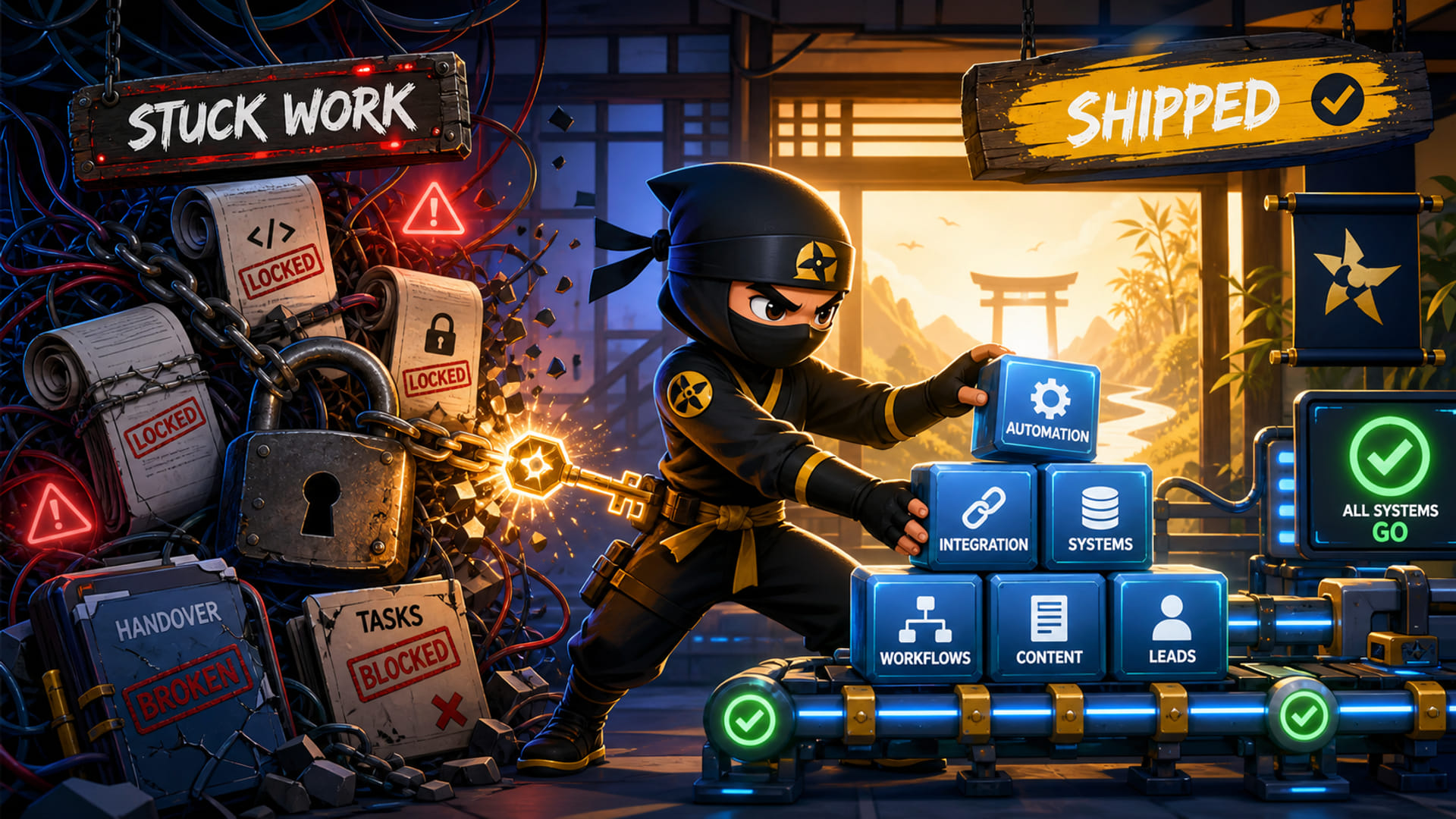

Work hostage is a strange phrase until you have lived through it. A business needs something built, fixed, explained or recovered, and suddenly the person who holds the technical knowledge also holds the leverage. The website, server, plugin, automation, login, codebase or workflow becomes less like a tool and more like a locked room.
The problem is not that development is easy. It is not. Good development needs judgement, testing, patience, architecture, restraint and the ability to understand how a business actually works. The problem is what happens when technical skill turns into control. Some developers help the work move. Others make the work depend on them forever.
That difference matters more than most people admit.
The Real Cost Is Not Just The Invoice
When a developer or agency makes the work hard to understand, the cost is not only the invoice. The cost is delay. The cost is uncertainty. The cost is a business owner having to ask the same question three different ways because the answer keeps moving. The cost is a half-finished system sitting in the background while everyone pretends the next milestone will fix it.
After enough years, that kind of friction changes how people approach technical work. They stop asking normal questions. They expect resistance. They assume every change will become a negotiation. They start planning around ego, silence, scope games, missing handovers and vague explanations.
That is not a healthy way to build digital systems. It is also not how serious operators want to work.
The Value Of A Developer Who Keeps Moving
The most valuable developer is not always the one with the loudest opinion. It is the one who helps the work move without turning every step into theatre.
Sometimes that means writing code. Sometimes it means reading the existing mess first. Sometimes it means explaining the current state clearly before touching anything. Sometimes it means creating a small tool instead of another meeting. Sometimes it means saying that the first idea is wrong and offering a better path.
Useful development has a rhythm. Read the state. Make the change. Test the change. Explain the result. Keep the business in control. That sounds simple, but it is rare enough that when it happens, it feels like a different category of help.
This is where AI automation becomes interesting. Not as a magic replacement for skill, but as a way to remove some of the friction between idea and execution. When it is guided properly, AI-assisted development can sit beside the business owner and keep pushing the work forward.
AI Is Not Perfect, But It Does Not Need An Ego
AI development is not perfect. It misunderstands things. It can overbuild. It can forget context if the workflow is weak. It can get stuck in loops. It needs rules, memory, review, gates and a person with taste to reject weak output.
But it has one advantage that is easy to underestimate: it does not need to protect its little kingdom.
It does not hold back an answer because knowledge is leverage. It does not make a simple question feel insulting. It does not disappear for weeks because the job became uncomfortable. It does not turn documentation into a favour. It does not make the business owner feel stupid for wanting to understand the system they are paying for.
It can be wrong, but it can be corrected. It can be clumsy, but it keeps working. It can produce weak output, but a strong workflow can tighten it. That makes the relationship different. The point is not that the machine is a genius. The point is that the work no longer has to wait for someone else’s ego to cooperate.
Shipping Changes The Relationship
Momentum changes everything. A system that sat unfinished for months can become a working local panel. A vague content idea can become a draft, a featured image, a WordPress post and a scheduled social workflow. A messy manual process can become a queue with approvals, history, gates and status. A recurring frustration can become a script that runs the same way every time.
None of that is glamorous from the outside. But for the person running the business, it is massive. Every unfinished system charges rent in the head. Every broken workflow creates another little hesitation before the next job starts. Every bad supplier experience makes the next technical decision feel heavier than it should.
When something finally helps the work ship, it gives back more than code. It gives back control.
The Human Still Decides What Matters
This does not mean handing the business to a machine. That would be another kind of laziness. The owner still has to decide what matters. The standards still have to come from the business. The taste still has to be enforced. The direction still has to be clear. The machine can assist, build, test, draft, generate, compare and automate, but it does not know what is valuable until someone teaches it.
That is why the workflow matters. Rules matter. Approved examples matter. History matters. Review gates matter. A strong business system does not let automation run wild. It gives automation a job, a boundary and a way to prove that the result is useful.
The best AI-assisted development does not remove responsibility. It makes responsibility more visible. The business can see what was created, what passed, what failed, what needs review and what should not be repeated.
Development Should Create Ownership, Not Dependence
Good technical work should leave the business stronger after the developer leaves the room. The code should not be a mystery for its own sake. The workflow should not require one person’s mood to function. The hosting, WordPress, content, automation, backups, access, schedules and integrations should be understandable enough that the owner can make decisions.
This is one reason NinjaWeb cares about systems instead of only outputs. A post is not just a post if it needs a queue, an image gate, WordPress metadata, internal links, scheduling and social distribution. A website is not just a design if it depends on hosting, performance, forms, SEO, backups, DNS and ownership. A tool is not finished if nobody knows how to run it again.
The goal is not to create dependence. The goal is to create a digital operating layer that the business can trust.
The Developer Who Unlocks The Work
The developer who matters is the one who unlocks the work.
Sometimes that developer is human. Sometimes it is AI-assisted. Often it is a combination: a person with taste, pressure, context and standards working with a machine that can read, write, test and keep going. The value is not perfection. The value is movement without ego, leverage without abuse, and technical work that becomes visible instead of hidden.
For business owners who have spent years dealing with technical gatekeeping, that has real value. Not because every output is perfect. Not because every automation is correct the first time. But because the work can finally stop being held hostage.
That is what useful development should feel like. Less theatre. Less mystery. Less waiting for permission. More shipped systems, clearer ownership and a business that can move.
NinjaWeb builds for that kind of control: hosting, WordPress, automation, content systems, infrastructure and digital workflows that help serious operators get work out of their head and into production.
Share this Post

WordPress Error Logs Are Not Noise. They Are the Map
shadow-scribe