
Contact Info
106 Anne Rd, Knoxfield VIC 3180, Australia
+61 (03) 82023009
info@ninjaweb.com.au
Contact usRecommended Services


Supported Scripts
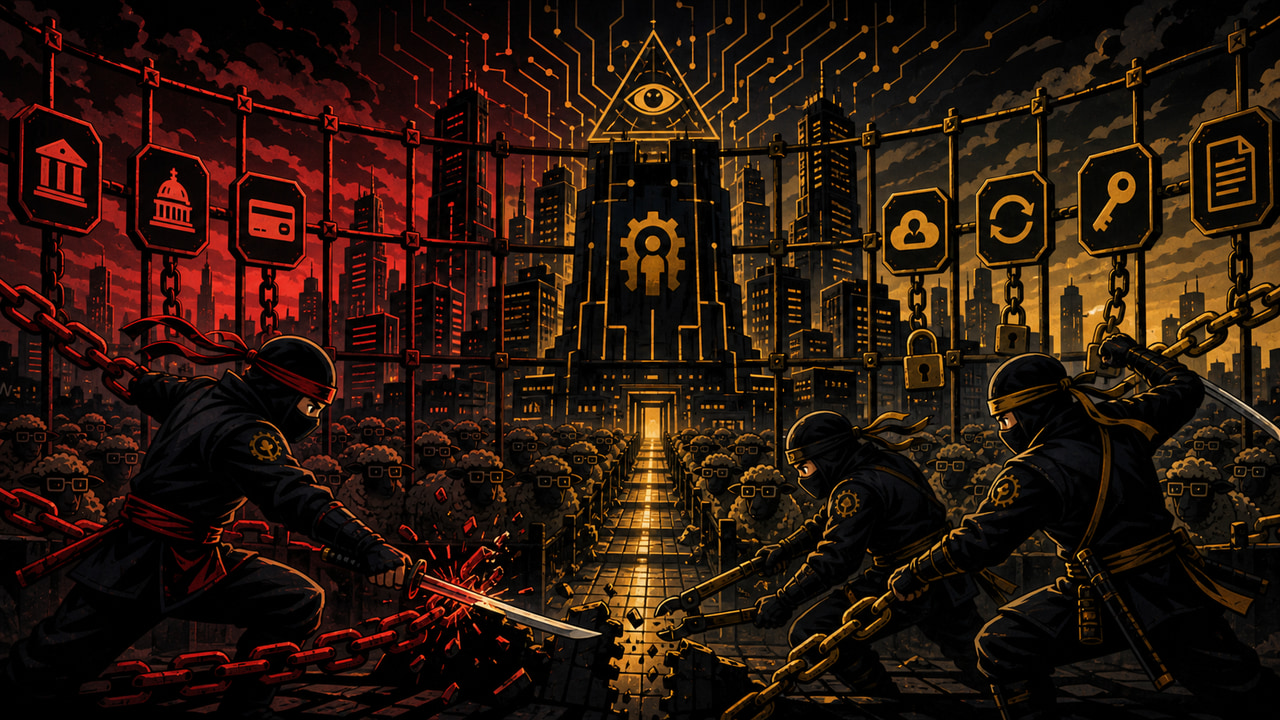

The Update Is the Cage because nobody takes the tool away anymore. They update it.
That is how it usually starts. Not with a ban. Not with a dramatic announcement. Not with someone telling you that you no longer own what you thought you owned. Just an update. A small change. A new licence. A new login requirement. A new pricing tier. A new “security improvement”. A new “better experience”.
At first, it looks harmless.
Then it becomes normal.
Then it becomes required.
That is the part people miss.
A thing does not need to be forced on you all at once. It only needs to become the path everyone else uses. Once your clients expect it, your staff need it, your workflow depends on it, your competitors adopt it, and the platforms around it treat it as standard, you no longer choose it freely.
You adapt or you get pushed out.
That is how the modern digital cage is built. Not with walls. With dependencies.
The Cage Is Built as Convenience
A business owner sees this before most people do, because business makes the leash visible.
You do not think about payment rails until a processor holds your money. Software licences feel invisible until the price changes. Platform power looks harmless until your reach disappears. Cloud dependency becomes real when an account is locked. Operating systems stay in the background until they start pushing features you never asked for.
You do not think about search engines until the traffic stops. Control panels feel like plumbing until the pricing model changes and the server you already pay for suddenly costs more because of the number of accounts sitting on it.
That is when the lie becomes clear.
You were told you owned the setup. Really, you were renting permission.
The software, the account, the payment, the search visibility, the audience, the workflow, even the right to keep doing tomorrow what worked yesterday: all of it was permission.
This is not anti-technology. That is the lazy way to dismiss the argument. Technology is not the enemy.
Dependency is.
The problem is not that tools became powerful. The problem is that the user became weaker.
Every year the dashboards get cleaner, the automation gets smarter, the integrations get smoother, and the exit doors get smaller. Everything is easier, until you want to leave. Everything is convenient, until the rules change. Everything is “yours”, until the account says otherwise.
That is not ownership.
Access Is Not Ownership
Ownership means you can keep using something when someone else changes their mind. Access means you can use it until someone else changes the terms.
Most of the modern internet has quietly moved from ownership to access.
Software became subscriptions. Files moved into cloud accounts. Audiences moved into platforms. Payments moved into processors. Trust moved into browsers and certificate authorities. Visibility moved into algorithms. Workflows moved into SaaS dashboards. Now even thinking is being moved into AI systems that decide what kind of help they are willing to give.
Every layer is sold as progress.
Security. Convenience. Compliance. Safety. Better user experience.
Sometimes those words are true. Encryption matters. Security matters. Fraud prevention matters. Good infrastructure matters. Nobody serious wants to go back to broken, unsafe systems.
But the same language that protects people can also be used to control them.
That is the trick.
Once a layer becomes mandatory, control moves toward whoever owns it. The trust badge on your site. The payment rail under your cash flow. The platform that brings the audience. The cloud account holding the files. The licence your workflow depends on. The login your own machine now expects.
And power does not need to announce itself.
It only needs to change the terms.
The real question for any business is not “what tools are we using?” The real question is: who can switch us off?
Who Can Switch the Business Off?
So the real test is simple. What breaks if one vendor changes terms, one platform cuts reach, one processor freezes money, one account gets locked, one update lands badly, or one policy turns yesterday’s system into tomorrow’s liability?
If the answer is yes, that is not infrastructure.
That is a hostage situation with a login screen.
The answer is not to reject every tool and run into the woods. That is fantasy. Serious businesses need modern systems. They need cloud. They need automation. They need AI. They need payments. They need platforms. They need speed.
But they also need memory.
They need to remember that convenience is not control.
That is why the same ownership principle behind not building your business on disposable marketplace control also applies to software, accounts, licences and platforms. The cheap path is not always cheap when the exit door belongs to someone else.
Use the cloud, but keep backups. Use platforms, but keep your own audience. Use AI, but keep your judgement. Use subscriptions, but know the exit. Use payment processors, but keep alternatives. Use automation, but understand the workflow without it. Use the big systems, but do not build your entire life inside one of them.
Because the future will not punish the business that uses technology.
It will punish the business that confuses access with ownership.
The same rule applies to AI: the value is not the tool by itself, it is whether the business still controls the execution. That is why AI only helps when the business can explain and control the process, not when another platform becomes the new place where all judgement disappears.
The cage does not have bars anymore.
It has updates, licences, subscriptions, policies, accounts, payment rails, trust layers and terms of service.
And the first step out is to stop pretending that being allowed to use something is the same as owning it.