


Contact Info
106 Anne Rd, Knoxfield VIC 3180, Australia
+61 (03) 82023009
info@ninjaweb.com.au
Contact usRecommended Services


Supported Scripts
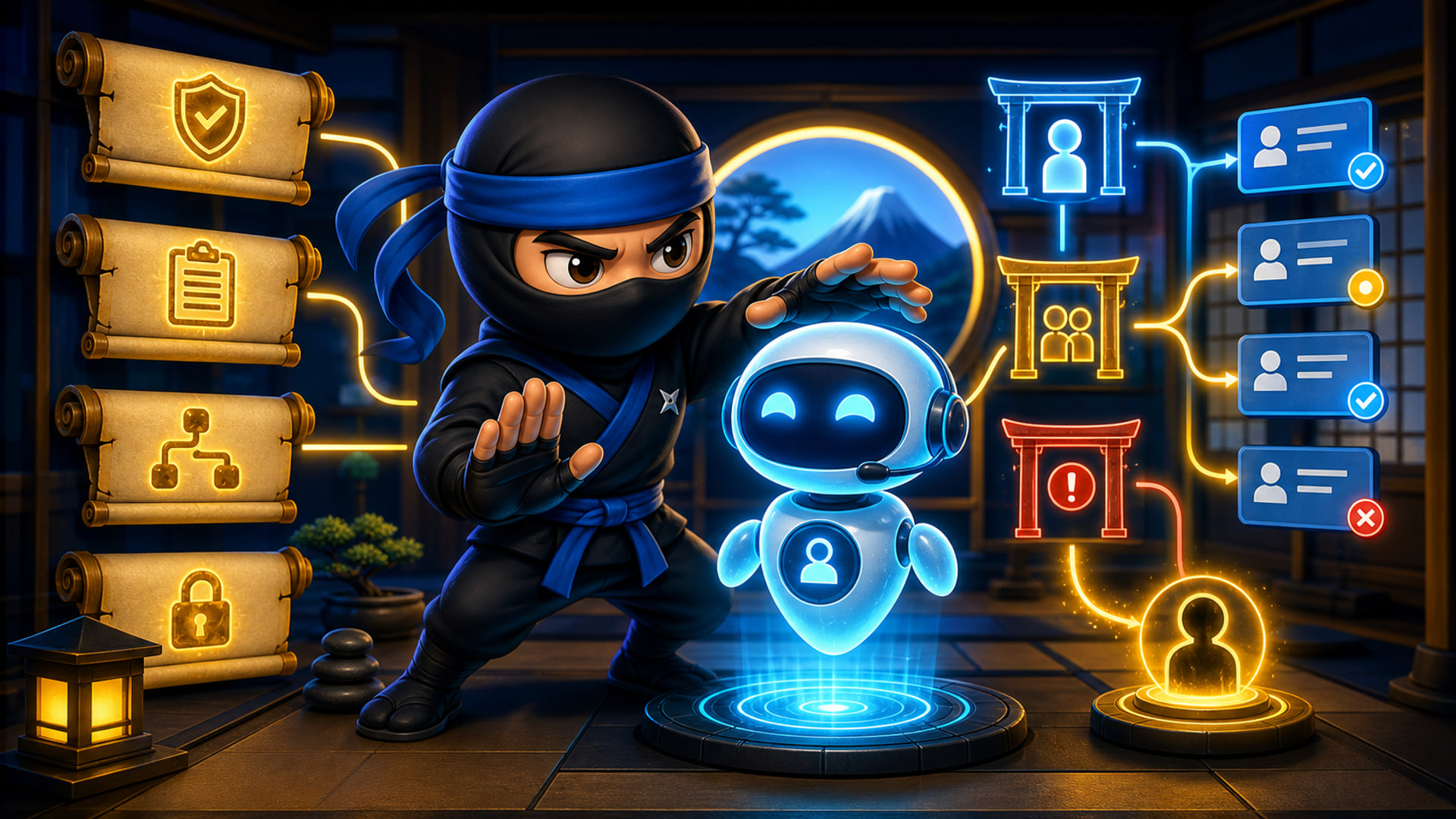

AI chatbots can answer questions and still fail the business. That is the part many companies miss. They see a chatbot reply quickly, sound polite and handle common questions, then assume the problem is solved. But a chatbot that has no authority, no escalation path and no business context is just a digital receptionist with better grammar.
Speed is not the same as usefulness. A customer does not only want an answer. They want movement. They want the right next step, the right person, the right form, the right quote path, the right support action or a clear boundary. If the chatbot cannot guide that, it becomes another layer between the customer and the business.
A Chatbot Needs a Job
The first question is not which chatbot to install. The first question is what job the chatbot should do. Should it answer service questions? Qualify leads? Route support? Book calls? Collect missing information? Reduce repeated admin? Help users find pages? Triage urgent issues?
Without a defined job, the chatbot becomes a novelty. It answers whatever it can and avoids whatever it cannot. That may look fine in a demo, but real customers bring messy requests. They ask half-formed questions. They mix services. They complain. They use vague language. They need decisions.
A useful chatbot is scoped. It knows what it is allowed to do, what it should never say, what it needs to collect and when it should hand off to a person.
Authority Means Knowing the Next Step
Authority does not mean letting a chatbot make risky decisions. It means giving it enough controlled power to move the customer forward. If someone asks about website hosting, the bot should know which hosting path matters. If someone needs SEO help, it should guide them toward the right service context. If someone has a support issue, it should collect the useful details instead of giving a generic reply.
A chatbot without authority says things like “please contact us” after every useful answer. That is not automation. That is a polite dead end. The customer still has to restart the process.
Authority comes from rules, forms, routing, CRM fields, escalation logic and clear service pages. The bot should be connected to the business system, not floating above it.
Knowledge Alone Is Not Enough
Many chatbot projects focus on knowledge. Upload the FAQs, train on the website, add service descriptions, and let the bot answer. Knowledge matters, but it is only one part of the workflow.
The bot also needs operational rules. Which enquiries are high priority? Which services require manual review? What information must be collected before a quote? Which support issues should not be handled by AI? What language should be avoided? How should the bot respond when it is unsure?
If these rules are missing, the chatbot may give answers that sound useful but do not support the business process. A confident answer is not always a good answer.
Escalation Is Part of the Product
Escalation should not be treated as failure. It is part of the product. A mature chatbot knows when to stop. It does not trap the customer in loops. It does not pretend to solve issues outside its scope. It does not hide the business behind automation.
Good escalation collects context before handoff. The customer should not have to repeat everything. The staff member should receive the summary, service type, urgency and relevant page path. That is where automation helps: it prepares the human decision instead of replacing it badly.
This is especially important for technical services. Hosting, SEO, WordPress issues and automation projects often need diagnosis. The bot can help intake. It should not fake certainty where a real review is needed.
The Website Still Does the Heavy Lifting
A chatbot is not a replacement for a clear website. If service pages are vague, pricing context is missing, calls to action are weak and forms are generic, the chatbot inherits that weakness. It may answer more questions, but it cannot fully compensate for a site that does not explain the business properly.
The website should give the chatbot strong ground. Pages should explain offers clearly. Forms should collect useful information. Internal links should support next steps. Analytics should show what users ask and where the site fails to answer.
That is why AI automation and website structure need to be planned together. The bot is one doorway into the system, not the system itself.
Review Keeps the Bot Honest
A chatbot needs review. Real conversations reveal gaps the business did not predict. Customers ask different questions. Offers change. Old answers become stale. New services appear. Edge cases expose weak rules.
Someone needs to read transcripts, update rules, improve pages, adjust prompts and check escalation quality. Without review, the chatbot decays. It may still reply quickly, but the replies drift away from the business.
The Best Bot Reduces Repetition
The best chatbot use case is usually not replacing the whole front desk. It is removing repeated low-value work so the real team can focus on decisions. If customers keep asking the same five questions, the bot can answer them. If enquiries keep arriving without enough detail, the bot can collect the missing fields. If users keep landing on the wrong page, the bot can guide them to the right service path.
That is useful because it supports the business instead of pretending to be the business. The bot becomes a controlled intake layer. It handles the repeatable part and hands off the judgement part with better context.
NinjaWeb’s position is simple: a chatbot should create control, not noise. It should support the website, forms, CRM and human team. If it only answers questions without moving customers forward, it is not a serious automation layer. It is decoration. A stronger business solution gives the chatbot a job, authority and a place in the workflow.